
How to Choose the Right Industrial PC for Your Business (Step-by-Step Guide)
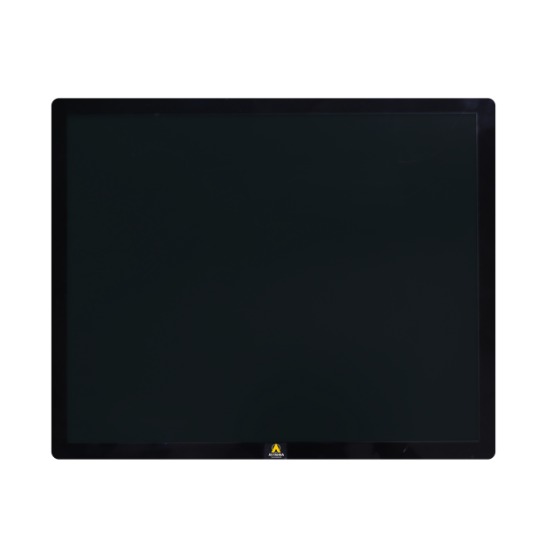
How to Choose the Right Industrial PC for Business
In today’s automation-driven industries, selecting the right Industrial PC is critical for operational efficiency, reliability, and long-term productivity. Whether you operate in manufacturing, automation, logistics, pharmaceuticals, or smart factories, the wrong computing solution can lead to downtime, compatibility issues, and increased maintenance costs.
Modern industrial environments demand systems that can withstand harsh conditions while delivering stable performance 24/7. This is where industrial-grade computing systems become essential.
In this step-by-step guide, we’ll explain how to choose the right Industrial PC for your business and what factors you should consider before investing.
What is an Industrial PC?
An Industrial PC is a rugged computing system specifically designed for industrial environments. Unlike standard commercial computers, these systems are built to operate reliably under:
- Extreme temperatures
- Dust and vibration
- Moisture and humidity
- Continuous operation environments
They are commonly used in:
- Factory automation
- SCADA systems
- Process control
- Machine monitoring
- HMI applications
- Industrial IoT systems
An industrial panel pc combines a display and computing system into a single compact unit, making it ideal for industrial automation and operator interface applications.
Why Choosing the Right Industrial PC Matters
The right Industrial PC can help businesses:
- Improve operational efficiency
- Reduce downtime
- Ensure stable automation processes
- Increase productivity
- Simplify machine control and monitoring
On the other hand, choosing an underpowered or incompatible system can create performance bottlenecks and maintenance challenges.
Step-by-Step Guide to Choosing the Right Industrial PC
Step 1: Understand Your Application Requirements
Before selecting any Industrial PC, identify how the system will be used.
Ask questions like:
- Will it be used for machine automation?
- Does it require real-time monitoring?
- Will operators interact through a touchscreen?
- Does the application run 24/7?
For HMI and operator control applications, an industrial panel pc is often the preferred choice because it offers both display and processing in one unit.
Step 2: Evaluate the Environmental Conditions
Industrial environments can be harsh. Your system should be able to handle:
- High temperatures
- Dusty conditions
- Water exposure
- Vibrations and shocks
Look for features such as:
- Fanless design
- IP-rated front panels
- Rugged metal chassis
- Wide operating temperature range
These features ensure long-term reliability and reduced maintenance.
Step 3: Choose the Right Processor Performance
Different applications require different processing capabilities.
Basic Applications
Suitable for:
- Data logging
- Simple monitoring
- Basic machine interfaces
Mid-Level Applications
Suitable for:
- SCADA systems
- Multi-machine control
- Industrial communication
High-Performance Applications
Suitable for:
- AI-based automation
- Vision systems
- Real-time analytics
- Edge computing
Selecting the correct CPU ensures smooth performance without overspending on unnecessary hardware.
Step 4: Check Display & Touchscreen Requirements
If operators interact directly with the system, display quality becomes important.
Consider:
- Screen size
- Touch responsiveness
- Brightness for industrial visibility
- Multi-touch support
An industrial panel pc with a responsive touchscreen can improve operational accuracy and user experience on the production floor.
Step 5: Verify Connectivity Options
Modern industrial systems require multiple communication interfaces.
Look for:
- USB ports
- LAN ports
- Serial ports (RS232/RS485)
- HDMI/VGA
- Wi-Fi support
- Expansion slots
Compatibility with PLCs, sensors, and industrial networks is essential.
Step 6: Consider Mounting & Space Constraints
Industrial spaces often have limited installation areas.
Choose mounting options based on your setup:
- Panel mount
- Wall mount
- DIN rail mount
- VESA mount
Compact systems help save valuable floor and cabinet space.
Step 7: Prioritize Reliability & Long-Term Support
Industrial environments require systems designed for continuous operation.
Check for:
- Industrial-grade components
- Long product lifecycle
- Spare parts availability
- Technical support
Reliable systems reduce operational interruptions and maintenance costs over time.
Step 8: Future Scalability Matters
Your business may expand in the future, so your Industrial PC should support scalability.
Look for:
- RAM upgrade options
- Additional storage support
- Expansion modules
- Compatibility with future software updates
A scalable system protects your long-term investment.
Why Industrial Panel PCs are Becoming Popular
Businesses are increasingly adopting industrial panel pc solutions because they:
- Save installation space
- Simplify machine integration
- Improve operator interaction
- Reduce wiring complexity
- Deliver cleaner industrial setups
These systems are ideal for smart manufacturing and Industry 4.0 applications.
Why Choose Avyanna Tech?
Avyanna Tech provides reliable and high-performance Industrial PC solutions designed for modern industrial applications.
Their solutions offer:
- Rugged industrial design
- High processing performance
- Multiple connectivity options
- Touchscreen integration
- Long-term operational reliability
Whether you need automation control systems, HMI solutions, or advanced industrial computing, Avyanna Tech offers solutions tailored for industrial environments.
Conclusion
Choosing the right Industrial PC is not just about hardware specifications; it’s about ensuring long-term operational reliability, productivity, and scalability.
By evaluating:
- Application requirements
- Environmental conditions
- Connectivity needs
- Performance expectations
you can select a solution that supports your business growth and automation goals effectively.
As industries continue moving toward smart automation and Industry 4.0, investing in the right industrial computing solution becomes more important than ever.
[email protected]