
How to Choose Between Ethernet IO Modules and Serial IO Modules
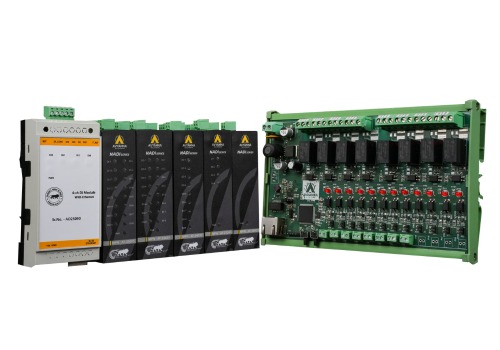
Remote I/O Module: Ethernet vs Serial IO Guide
Industrial automation is evolving rapidly, and modern factories now demand faster communication, scalable control systems, and reliable data exchange across machines and processes. At the center of this transformation is the remote i/o module, a critical component that connects sensors, actuators, PLCs, and monitoring systems efficiently.
But when selecting a remote I/O solution, one common question arises:
Should you choose an Ethernet I/O module or a Serial I/O module?
The answer depends on your application, communication requirements, installation environment, and future scalability needs. In this guide, we’ll explain the differences, advantages, and ideal use cases of both technologies to help engineers, OEMs, and plant managers make the right decision.
What Is a Remote I/O Module?
A remote i/o module is an industrial communication device used to collect and transmit signals between field devices and central controllers such as PLCs, SCADA systems, HMIs, etc.
Instead of routing all field wiring directly to a control panel, remote I/O systems distribute the connections closer to field devices. This reduces wiring complexity, improves system flexibility, and simplifies maintenance.
An input output module can handle:
- Digital inputs and outputs
- Analog inputs and outputs
- RTD and thermocouple signals
- Relay control
Modern remote I/O systems commonly use:
- Modbus RTU for Serial communication
- Modbus TCP/IP for Ethernet communication
Understanding Serial I/O Modules
Serial remote I/O modules communicate using serial protocols such as RS485 with Modbus RTU communication.
At Avyanna Tech, the TANTU Series represents the brand’s serial remote I/O family designed for reliable industrial communication in field applications.
The word “Tantu” signifies a thread or connection, reflecting stable and consistent serial communication in industrial environments.
Key Features of TANTU Serial Remote I/O Modules
- Modbus RTU communication
- Robust industrial design
- Galvanic isolation for signal protection
- Automatic data direction control
- Reliable long-distance communication
- Suitable for harsh industrial environments
Available TANTU Series Modules
- 8-ch Analog Input with Modbus RTU
- 4 Analog Output – 4 Digital Input Module
- 7-ch RTD Module
- 8-ch Thermocouple Input Module
- 8 Digital Input – 8 Digital Relay Output Module
- 8 Digital Relay Output Module
- 16 Digital Input Module
Understanding Ethernet I/O Modules
Ethernet remote I/O modules use Ethernet-based communication protocols such as Modbus TCP/IP for high-speed industrial networking and real-time data exchange.
Avyanna Tech’s NADI Series is designed for seamless Ethernet communication across modern automation systems.
The term “Nadi” symbolizes continuous flow, representing uninterrupted Ethernet communication and smooth industrial data transfer.
Key Features of NADI Ethernet Remote I/O Modules
- Modbus TCP/IP communication
- Faster data transmission
- Real-time communication capability
- Easy integration with PLC and SCADA systems
- Network scalability
- Industrial-grade signal protection
- Galvanic isolation for improved safety
Available NADI Series Modules
- 8-ch Analog Input with Modbus TCP
- 4 Analog Output – 4 Digital Input Module
- 7-ch RTD Module
- 8-ch Thermocouple Input Module
- 8 Digital Input – 8 Digital Relay Output Module
- 8 Digital Relay Output Module
- 16 Digital Input Module
- 12 Digital Input 8 Digital Output Module with TCP/IP
- 4 Digital Input Module with TCP/IP
Ethernet I/O Modules vs Serial I/O Modules
| Feature | Serial I/O Modules | Ethernet I/O Modules |
| Communication Protocol | Modbus RTU | Modbus TCP/IP |
| Communication Medium | RS485 Serial | Ethernet Network |
| Speed | Moderate | High-Speed |
| Wiring Complexity | Simple | Network-based |
| Scalability | Limited | Highly Scalable |
| Real-Time Monitoring | Basic | Advanced |
| Best For | Small to medium systems | Smart factories & large systems |
| Distance Capability | Good for long-distance serial links | Excellent for networked systems |
| Integration | Traditional PLC systems | Modern PLC/SCADA architectures |
When Should You Choose a Serial Remote I/O Module?
A serial input output module is often the right choice when:
1. Existing Systems Already Use RS485 Networks: Many industrial plants still operate on established Modbus RTU infrastructure. Serial remote I/O modules integrate easily without major modifications.
2. Budget Is a Key Concern: Serial communication systems are generally more cost-effective for smaller installations.
3. Communication Requirements Are Moderate: Applications that do not require high-speed real-time communication can efficiently operate using serial remote I/O modules.
4. Long-Distance Communication Is Needed: RS485 communication supports reliable long-distance industrial communication in electrically noisy environments.
Common Applications
- Water treatment systems
- Utility monitoring
- Process automation
- Legacy industrial systems
- Small machine automation
When Should You Choose an Ethernet Remote I/O Module?
Ethernet-based remote i/o module systems are ideal for modern automation environments.
1. High-Speed Data Communication Is Required: Ethernet communication supports faster response times and real-time monitoring.
2. Smart Factory Integration Is Planned: Industry 4.0 systems require Ethernet connectivity for SCADA, IoT, cloud monitoring, and centralized analytics.
3. System Expansion Is Expected: Ethernet networks are easier to scale across multiple machines and production lines.
4. Centralized Monitoring Is Important: Modbus TCP allows seamless communication between multiple controllers and remote monitoring systems.
Common Applications
- Smart manufacturing plants
- Packaging automation
- Pharmaceutical industries
- Process industries
- Energy management systems
- SCADA-integrated plants
Why Galvanic Isolation Matters in Remote I/O Systems
Industrial environments often contain electrical noise, voltage fluctuations, and grounding differences that can damage communication systems.
Avyanna Tech remote I/O modules feature galvanic isolation, which helps:
- Protect sensitive control systems
- Improve signal integrity
- Reduce communication errors
- Enhance industrial safety
- Increase system reliability
This becomes especially important in harsh industrial applications where uninterrupted communication is essential.
Benefits of Using Distributed Remote I/O Systems
Modern distributed remote I/O architecture offers several advantages over traditional centralized wiring systems.
- Reduced Wiring Costs: Field devices connect closer to machines, reducing cable lengths and installation complexity.
- Easier Maintenance: Fault isolation and troubleshooting become simpler with modular remote I/O setups.
- Improved Scalability: Additional modules can be added without redesigning the entire control panel.
- Better System Flexibility: Distributed systems support expansion and process modifications more efficiently.
How to Select the Right Remote I/O Modules?
Before selecting a remote I/O solution, evaluate these factors:
- Communication Protocol: Choose “Modbus RTU” for serial communication, and “Modbus TCP/IP” for Ethernet-based networking.
- Type of Signals: Identify whether your application requires: Analog inputs, Digital inputs/outputs, RTD inputs, Thermocouple inputs, and Relay outputs.
- Environmental Conditions: Select rugged industrial modules with protection against electrical noise and harsh conditions.
- Future Expansion: If scalability and Industry 4.0 integration are priorities, Ethernet-based systems offer greater flexibility.
- Integration Requirements: Ensure compatibility with your PLC, SCADA, HMI, or existing automation architecture.
Choosing the Right Solution for Modern Automation
Both serial and Ethernet remote I/O modules play an important role in industrial automation. The right choice depends on your operational goals, infrastructure, communication speed, and expansion plans.
Serial remote I/O modules are ideal for reliable and cost-effective field communication, while Ethernet remote I/O modules are better suited for high-speed, scalable, and Industry 4.0-ready automation systems.
With robust designs, Modbus RTU/TCP support, galvanic isolation, and industrial-grade reliability, Avyanna Tech’s TANTU and NADI series provide dependable solutions for modern industrial communication needs.



[email protected]