
How to Choose the Right Industrial Gateway Server for Your Factory
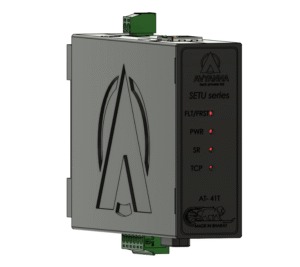
Industrial Gateway Server: Choosing the Right One
Modern factories depend on seamless communication between PLCs, sensors, HMIs, SCADA systems, and industrial controllers. However, many manufacturing plants still use legacy serial devices alongside modern Ethernet networks, making reliable data exchange a challenge.
An Industrial Gateway Server solves this problem by bridging different industrial communication protocols, enabling smooth integration without replacing existing equipment. If you’re planning to upgrade your factory’s automation network, selecting the right Modbus Gateway is an important decision.
This guide explains the key factors to consider before choosing an industrial gateway for your application.
What Is an Industrial Gateway Server?
An Industrial Gateway Server is a communication device that connects industrial equipment using different interfaces and protocols. It enables data exchange between serial devices and Ethernet-based industrial networks, allowing both legacy and modern systems to work together.
Factories use gateway servers to:
- Connect PLCs with SCADA systems
- Integrate legacy Modbus RTU devices into Ethernet networks
- Reduce communication complexity
- Improve monitoring and data accessibility
- Support industrial automation upgrades without replacing existing equipment
What Is a Modbus Gateway?
A Modbus Gateway converts communication between Modbus serial protocols and Modbus TCP/IP networks.
It allows factories to integrate:
- Modbus RTU devices
- Modbus ASCII devices
- Ethernet-based industrial controllers
- Industrial monitoring software
- Automation systems
This helps organizations modernize their communication infrastructure while continuing to use reliable field devices.
Why Choosing the Right Gateway Matters
Selecting the appropriate gateway affects:
- Communication reliability
- Network stability
- System scalability
- Equipment compatibility
- Long-term maintenance
Using the wrong gateway may create communication bottlenecks, compatibility issues, or unnecessary system limitations.
Factors to Consider When Choosing an Industrial Gateway Server
1. Number of Serial Devices
Start by identifying how many serial devices need to connect simultaneously.
Different applications require different gateway capacities.
For example:
- Small control panels may only require a 1-Port Modbus Gateway
- Medium automation systems often benefit from a 2-Port Gateway
- Larger factories can simplify communication using a 4-Port Gateway
Selecting the correct number of ports avoids unnecessary hardware while leaving room for future expansion.
2. Supported Communication Protocols
Protocol compatibility is one of the most important selection criteria.
Your gateway should support the protocols already used in your factory.
For industrial environments, support for:
- Modbus TCP
- Modbus RTU
- Modbus ASCII
ensures smooth integration between serial equipment and Ethernet networks.
3. Serial Interface Compatibility
Industrial equipment uses different serial communication standards.
Ensure the gateway supports:
- RS-232
- RS-422
- RS-485
This flexibility allows connection with a wide range of PLCs, controllers, meters, and industrial instruments.
4. Ethernet Connectivity
Factories increasingly rely on Ethernet-based communication for centralized monitoring.
An Industrial Gateway Server with Ethernet capability enables:
- Network-based monitoring
- Remote communication
- SCADA integration
- Simplified industrial networking
Reliable Ethernet connectivity also improves system flexibility as operations expand.
5. Industrial-Grade Reliability
Factory environments demand hardware designed for continuous operation.
Choose a gateway that offers:
- Industrial-grade enclosure
- High isolation protection
- ESD protection
- Stable long-term performance
- DIN-rail mounting for easy installation
These features contribute to dependable operation in demanding industrial settings.
6. Easy Configuration
Installation and maintenance become much easier when the gateway includes user-friendly configuration tools.
A web-based configuration interface allows engineers to:
- Configure communication parameters
- Manage network settings
- Reduce commissioning time
- Simplify future maintenance
7. Simultaneous Communication
Some industrial applications require multiple systems to access data at the same time.
A gateway capable of supporting multiple simultaneous connections improves:
- SCADA communication
- PLC integration
- Data acquisition
- Overall network efficiency
Typical Applications of Industrial Gateway Servers
Industrial Gateway Servers are widely used across manufacturing and process industries.
Common applications include:
- Manufacturing plants
- Machine automation
- Process industries
- Water treatment facilities
- Energy management systems
- Building automation
- Industrial monitoring systems
- Remote equipment communication
Avyanna Tech SETU Series Modbus Gateway
The SETU Series from Avyanna Tech is designed to integrate Modbus RTU and Modbus ASCII serial devices with modern TCP/IP network-based systems.
Available options include:
- 1-Port RS-232/422/485 Modbus Gateway (AT-41M)
- 2-Port RS-232/422/485 Modbus Gateway (AT-42M)
- 4-Port RS-232/422/485 Modbus Gateway (AT-44M)
Key capabilities include:
- Supports Modbus TCP, RTU, and ASCII protocols
- RS-232, RS-422, and RS-485 communication
- Ethernet connectivity
- Bi-directional communication
- Web-based configuration
- DIN-rail mounting
- Industrial-grade enclosure
- High isolation and ESD protection
- Designed for industrial automation environments
These features help factories integrate existing serial equipment with Ethernet-based automation systems while minimizing infrastructure changes.
Why Factories Choose Industrial Gateway Servers
Investing in the right gateway provides several operational benefits:
- Simplifies industrial communication
- Extends the life of existing equipment
- Reduces integration costs
- Supports automation upgrades
- Improves system reliability
- Enables centralized monitoring
- Facilitates future network expansion
Frequently Asked Questions
1. What does an Industrial Gateway Server do?
An Industrial Gateway Server connects devices using different communication protocols, allowing serial equipment to communicate with Ethernet-based industrial networks.
2. What is a Modbus Gateway used for?
A Modbus Gateway enables communication between Modbus RTU or ASCII serial devices and Modbus TCP/IP networks.
3. Which serial interfaces should a gateway support?
Many industrial applications require compatibility with RS-232, RS-422, and RS-485 communication standards.
4. How many gateway ports do I need?
It depends on the number of serial devices in your system. Single-port models suit smaller installations, while multi-port gateways support larger automation networks.
5. Why is industrial-grade hardware important?
Industrial environments require reliable equipment capable of continuous operation with protection against electrical interference and harsh operating conditions.
Conclusion
Selecting the right Industrial Gateway Server is essential for building a reliable and scalable industrial communication network. By evaluating protocol support, serial interfaces, Ethernet connectivity, configuration options, and industrial-grade reliability, factories can choose a solution that meets both current and future automation needs.
If you’re looking for dependable Modbus Gateway solutions, Avyanna Tech’s SETU Series offers 1-port, 2-port, and 4-port models designed to integrate legacy serial devices with modern Ethernet-based industrial systems, helping manufacturers achieve efficient and reliable communication across their operations.



[email protected]