
Why Industrial Keyboards Last Longer Than Commercial Keyboards
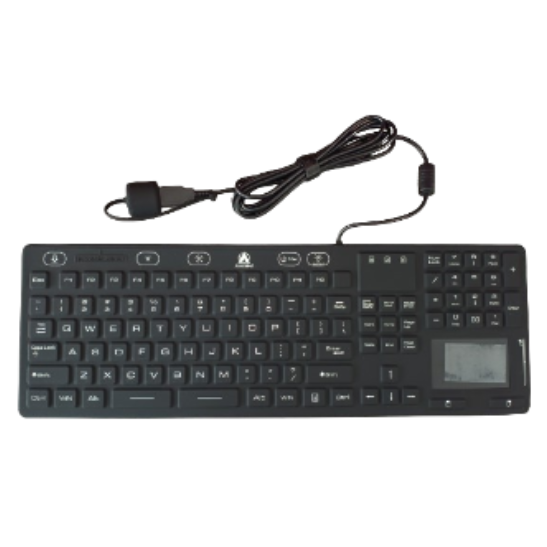
Industrial Keyboard: Why It Outlasts Commercial
An industrial keyboard can run for years in a dusty factory or a washdown food processing line, while a commercial keyboard placed in the same environment often fails within weeks or months. The difference isn’t marketing – it comes down to fundamentally different design choices in materials, sealing, and internal components, all built around one goal: surviving continuous use in conditions a standard keyboard was never engineered to handle.
Commercial keyboards are designed for offices – clean air, stable temperatures, occasional light use, and a desk that gets wiped down at most once a week. Industrial environments are the opposite: airborne dust and particulates, temperature swings, frequent cleaning with harsh chemicals, and often 24/7 operation across multiple shifts. An industrial keyboard is engineered specifically to survive that gap, and understanding exactly how reveals why the extra durability is worth the investment.
This article breaks down the specific design, material, and construction differences that allow an industrial keyboard to consistently outlast its commercial counterpart in demanding environments.
What Actually Causes Commercial Keyboards to Fail?
Before looking at what makes an industrial keyboard durable, it helps to understand exactly how commercial keyboards typically fail in industrial or heavy-use settings:
- Dust and debris ingress – commercial keyboards have gaps around and beneath keys that allow dust, crumbs, and particulates to accumulate, eventually causing keys to stick or stop registering.
- Liquid damage – spilled coffee, water, or industrial fluids seep through unsealed keyboards and short-circuit internal membrane layers or circuit boards.
- Mechanical wear from high-frequency use – commercial key switches are typically rated for 5-10 million actuations; in 24/7 industrial settings, this threshold is reached far faster than in typical office use.
- Chemical degradation – repeated cleaning with industrial disinfectants or solvents breaks down plastic housings and keycap printing not designed to resist those chemicals.
- Connector and cable failure – standard USB cables and connectors are prone to fraying or disconnecting under the physical stress of industrial handling.
The Design Differences That Make an Industrial Keyboard Last Longer
1. Fully Sealed Membrane Construction
An industrial keyboard typically uses a single-piece silicone or polyurethane membrane that seals the entire key surface, rated IP65 to IP68 depending on the model. This creates a continuous barrier against dust, liquids, and contaminants – there are no gaps between or beneath keys for debris to enter, unlike the individual mechanical switches found in most commercial keyboards.
2. Higher-Rated Key Switches
Industrial keyboards are built with key switches rated for tens of millions of actuations – often 10-20 million or more – compared to the 5-10 million rating typical of commercial keyboards. In continuous 24/7 environments, this translates directly into years of additional service life before keys begin to fail or lose tactile response.
3. Chemical-Resistant Materials
Housings, keycaps, and membrane surfaces on industrial keyboards are formulated to resist degradation from disinfectants, solvents, and cleaning chemicals commonly used in food processing, pharmaceutical, and healthcare-adjacent facilities. Commercial keyboard plastics are not designed with this chemical exposure in mind and will often discolor, crack, or become brittle over repeated exposure.
4. Reinforced Internal Circuitry
Rather than the thin, flexible printed circuits found in most commercial keyboards, industrial keyboards often use more robust internal wiring and connection points designed to withstand vibration, physical impact, and the mechanical stress of being mounted on equipment or subjected to frequent handling.
5. Rugged, Locking Connectors
Industrial keyboards frequently use locking USB or PS/2 connectors, along with reinforced cable jacketing, to prevent accidental disconnection and reduce wear at the connection point – a common failure area for commercial keyboards subjected to frequent movement or vibration.
6. Metal or Reinforced Housings
While commercial keyboards use lightweight, often brittle plastic housings, many industrial keyboards incorporate metal backing plates or reinforced composite housings that resist cracking from drops, impacts, or the physical stress of panel mounting.
7. Wide Operating Temperature Tolerance
Industrial keyboards are rated to function across much wider temperature ranges than commercial models, allowing reliable operation in unheated warehouses, refrigerated processing areas, or hot factory floors without the plastic and membrane materials becoming brittle or overly soft.
Industrial Keyboard vs. Commercial Keyboard: Lifespan Comparison
| Factor | Industrial Keyboard | Commercial Keyboard |
| Sealing | Full membrane seal, IP65-IP68 | Minimal or no sealing |
| Key switch rating | 10-20+ million actuations | 5-10 million actuations |
| Chemical resistance | Formulated for disinfectants/solvents | Not chemical-resistant |
| Typical lifespan (continuous use) | 5-10+ years | 6 months to 2 years |
| Operating temperature range | Extended (-20°C to 60°C common) | Standard office range (10°C to 35°C) |
| Connector durability | Locking, reinforced | Standard, prone to wear |
| Housing material | Metal-reinforced or heavy-duty composite | Lightweight plastic |
Where the Extra Durability Pays Off Most
The lifespan advantage of an industrial keyboard becomes most valuable in specific environments:
- Food and beverage processing, where daily washdown with high-pressure water and disinfectants would destroy a commercial keyboard within weeks
- Manufacturing floors with airborne dust, metal shavings, or oil mist that clogs standard keyboard mechanisms
- Pharmaceutical and cleanroom environments, where frequent chemical sanitization is a daily requirement
- Outdoor or unconditioned facilities, where temperature extremes cause commercial plastics and membranes to degrade faster
- 24/7 control rooms, where continuous use accelerates mechanical wear far beyond typical office-hours usage
Calculating the True Cost of Commercial Keyboards in Industrial Settings
While an industrial keyboard typically costs more upfront than a commercial model, the total cost of ownership often favors the industrial option once replacement frequency is factored in. A facility replacing commercial keyboards every 6-12 months – accounting for hardware cost, IT labor, and any production downtime during replacement – frequently spends more over a 5-year period than it would have spent on a single industrial keyboard rated for that same lifespan.
Frequently Asked Questions
Why do industrial keyboards last longer than commercial keyboards?
Industrial keyboards last longer because they use fully sealed membrane construction, higher-rated key switches (often 10-20 million actuations or more), chemical-resistant materials, and reinforced housings – all designed to withstand dust, liquids, and continuous use that would quickly damage a commercial keyboard.
How long does an industrial keyboard typically last?
With proper environmental matching, an industrial keyboard is generally designed to last 5 to 10 years or more in continuous industrial use, compared to 6 months to 2 years for a commercial keyboard in the same conditions.
Can industrial keyboards withstand chemical cleaning?
Yes. Many industrial keyboards are built with chemical-resistant housings and membrane materials specifically formulated to withstand repeated exposure to disinfectants and cleaning solvents used in food processing, pharmaceutical, and healthcare-adjacent environments.
Are industrial keyboards worth the higher upfront cost?
In most industrial settings, yes. While industrial keyboards cost more initially, their significantly longer lifespan often results in lower total cost of ownership compared to repeatedly replacing commercial keyboards that fail every few months to a year.
What IP rating should an industrial keyboard have for washdown environments?
Washdown environments, such as food and beverage processing facilities, typically require an industrial keyboard rated IP66 or higher, with some applications calling for IP68-rated models for full submersion resistance during cleaning.
Invest in Hardware Built to Outlast the Environment
The gap between an industrial keyboard and a commercial keyboard isn’t marginal – it’s the difference between hardware that lasts years and hardware that needs replacing every few months. Sealed membrane construction, higher-rated switches, and chemical-resistant materials all add up to real savings in replacement costs and downtime over the life of the equipment.
At Avyanna Tech, we help facilities choose the right industrial keyboard for their specific environment, from washdown-rated sealed units to rugged panel-mount options built for years of continuous use. Contact us to explore our full range of industrial keyboard solutions and equip your facility with hardware built to last.

[email protected]