Remote I/O Module vs Traditional I/O: Which Is Better for Your Factory?
Remote I/O Module vs Traditional I/O: Which Wins?
A remote I/O module moves input and output points closer to the field devices they connect to – sensors, actuators, motors, valves – rather than routing every single wire back to a centralized PLC cabinet. Traditional I/O, by contrast, keeps all input/output termination centralized at the controller, meaning every field device needs its own dedicated wire run back to one location, regardless of distance.
For factories planning a new automation system or expanding an existing one, this decision affects wiring costs, installation time, future scalability, and even fault diagnosis. Neither approach is universally “better” – the right choice depends on facility layout, the number of I/O points involved, and how much future expansion is expected.
This article compares remote I/O modules against traditional centralized I/O, covering the practical differences in cost, scalability, and maintenance, so you can determine which approach fits your factory floor.
What Is a Remote I/O Module?
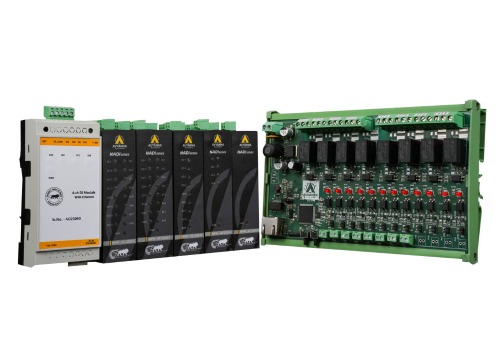
A remote I/O module is an input/output device installed near the field equipment it monitors or controls, communicating back to a central PLC or controller over a network connection – such as Ethernet, Modbus, or a fieldbus protocol – rather than through direct point-to-point wiring. Each remote I/O module typically handles a cluster of nearby digital and analog input/output module points, consolidating what would otherwise be dozens of individual wire runs into a single network cable back to the controller.
This architecture is sometimes called “distributed I/O,” since input/output processing is distributed across the facility rather than centralized in one cabinet.
What Is Traditional (Centralized) I/O?
Traditional I/O architecture terminates every field device’s wiring directly at a central PLC rack or control cabinet. Every sensor, switch, valve, and actuator has its own dedicated wire run – sometimes hundreds of feet long – back to a single termination point. This approach has been the standard in industrial automation for decades and remains well-suited to smaller, tightly clustered installations.
Remote I/O Module vs. Traditional I/O: Key Differences
1. Wiring Costs and Installation Labor
Traditional I/O requires running individual wires from every field device back to a central cabinet, which becomes expensive quickly as distances increase and device counts grow. A remote I/O module dramatically reduces wiring costs by placing the input/output module near the field devices and running only a single network cable back to the controller – often cutting wiring material and installation labor significantly on larger facilities.
2. Scalability
Adding new devices to a traditional I/O system often means running an entirely new wire back to the central cabinet, which can be disruptive and costly in facilities where cable trays are already at capacity. Remote I/O modules make expansion simpler: additional I/O points can often be added locally, with only a network connection needed back to the existing infrastructure – a meaningful advantage for facilities expecting future growth.
3. Distance Limitations
Traditional I/O wiring, particularly for analog signals, is subject to distance-related signal degradation and voltage drop over long cable runs. Remote I/O modules, communicating over Ethernet or fieldbus protocols, can be positioned much farther from the central controller without the same signal integrity concerns, since digital network communication doesn’t degrade the same way analog signals do over distance.
4. Fault Diagnosis and Maintenance
With traditional I/O, tracing a wiring fault often means physically following long cable runs across the facility. Remote I/O modules typically include local diagnostic indicators and network-based status reporting, making it easier to isolate which module – and by extension, which general area of the facility – is experiencing an issue, without needing to trace individual wires.
5. Upfront Cost vs. Long-Term Cost
Traditional I/O can have a lower upfront hardware cost for very small installations with devices clustered near the control cabinet. However, once wiring distance and device count increase, remote I/O modules frequently become more cost-effective when accounting for total installed cost – wiring materials, conduit, labor, and future expansion flexibility.
6. Network Dependency
Remote I/O modules depend on network connectivity (Ethernet, fieldbus, or wireless) to communicate with the central controller, meaning network reliability becomes a factor in overall system uptime. Traditional I/O, using direct point-to-point wiring, doesn’t share this dependency, which can be a consideration in facilities with less mature network infrastructure.
Remote I/O Module vs. Traditional I/O: Comparison Table
| Factor | Remote I/O Module | Traditional (Centralized) I/O |
| Wiring requirements | Minimal – network cable to central controller | Extensive – dedicated wire per device |
| Installation labor | Lower, especially for spread-out facilities | Higher, scales with distance and device count |
| Scalability | Easier – add modules with network connection | Harder – new wire runs required |
| Signal distance limitations | Minimal, network-based communication | Significant for long analog runs |
| Fault diagnosis | Local diagnostics, network status reporting | Manual wire tracing often required |
| Best suited for | Large, spread-out, or expanding facilities | Small, compact installations |
| Network dependency | Yes | No |
When Traditional I/O Still Makes Sense
Despite the advantages of remote I/O modules, traditional centralized I/O remains a reasonable choice in certain situations:
- Small, compact installations where all field devices are located close to the control cabinet
- Facilities without reliable network infrastructure, where adding network dependency isn’t practical
- Simple applications with a fixed, small device count and no planned future expansion
- Legacy systems already built around centralized wiring that aren’t being significantly modified
When a Remote I/O Module Is the Better Choice
A remote I/O module architecture generally makes more sense when:
- Field devices are spread across a large facility or multiple buildings
- Future expansion of I/O points is expected
- Wiring and conduit installation costs are a significant budget concern
- Faster fault diagnosis and reduced downtime are priorities
- The facility already has reliable Ethernet or fieldbus network infrastructure in place
How to Choose the Right Remote I/O Module for Your Facility
- Match I/O point count and type: Confirm the input/output module supports the specific mix of digital and analog points your application requires.
- Check protocol compatibility: Ensure compatibility with your existing PLC and network protocol (Modbus TCP, EtherNet/IP, PROFINET, etc.).
- Look for expandability: Choose modules that support adding additional I/O points or modules without replacing existing hardware.
- Confirm environmental ratings: Remote I/O modules installed on the factory floor should carry appropriate IP ratings and operating temperature tolerances for the installation location.
- Evaluate diagnostic features: Local status indicators and network-based diagnostics significantly reduce troubleshooting time compared to basic pass-through modules.
- Review manufacturer support: Choose a remote I/O manufacturer with a track record of long-term product availability and technical support for industrial deployments.
Choosing a Reliable Remote I/O Manufacturer
Selecting the right hardware is only part of the equation – the manufacturer behind it matters just as much for long-term reliability. When evaluating remote I/O manufacturers in India or globally, prioritize suppliers who offer:
- Proven industrial-grade build quality suited to Indian factory floor conditions, including dust, heat, and voltage fluctuation tolerance
- A broad product range covering different I/O point counts and protocol requirements
- Local technical support and service availability for faster response times
- Long-term product lifecycle commitments, ensuring replacement modules remain available for years
- Clear documentation and integration support for common PLC and SCADA platforms
Working with an established IO module manufacturer rather than a generic supplier reduces integration risk and ensures consistent quality across an entire facility’s I/O deployment.
Frequently Asked Questions
What is the difference between a remote I/O module and traditional I/O?
A remote I/O module is installed near field devices and communicates back to a central controller over a network connection, reducing wiring requirements. Traditional I/O terminates every field device’s wiring directly at a central control cabinet, requiring a dedicated wire run for each device regardless of distance.
Is a remote I/O module more cost-effective than traditional I/O?
For larger or spread-out facilities, a remote I/O module is typically more cost-effective once wiring materials, conduit, and installation labor are factored in, since it replaces multiple long individual wire runs with a single network connection. Traditional I/O can be more economical only in small installations where devices are already clustered near the control cabinet.
What is an input output module used for?
An input output module – whether part of a traditional centralized I/O rack or a remote I/O architecture – converts and manages digital and analog signals between field devices (sensors, switches, actuators) and a PLC or controller, enabling the automation system to read inputs and control outputs.
Do remote I/O modules require a reliable network connection?
Yes. Remote I/O modules depend on network connectivity – typically Ethernet, Modbus TCP, or a fieldbus protocol – to communicate with the central controller, making network reliability an important factor in overall system uptime.
How do I choose a reliable remote I/O manufacturer in India?
Look for a remote I/O manufacturer with industrial-grade build quality suited to local factory conditions, a broad product range across I/O point counts and protocols, local technical support, and a track record of long-term product availability for replacement parts.
Match Your I/O Architecture to Your Facility’s Needs
Choosing between a remote I/O module and traditional centralized I/O comes down to facility layout, scalability needs, and total installed cost – not just which technology is newer. Spread-out or growing facilities generally benefit most from remote I/O’s reduced wiring and easier expansion, while small, compact installations may still find traditional I/O sufficient.
At Avyanna Tech, we work as a trusted IO module manufacturer and supplier, helping factories across India select the right remote I/O module architecture for their specific layout and automation goals. Contact us to explore our full range of remote I/O modules and build an I/O architecture that scales with your facility.



[email protected]