
What Should You Look for in a Remote Terminal Unit for Remote Site Monitoring?
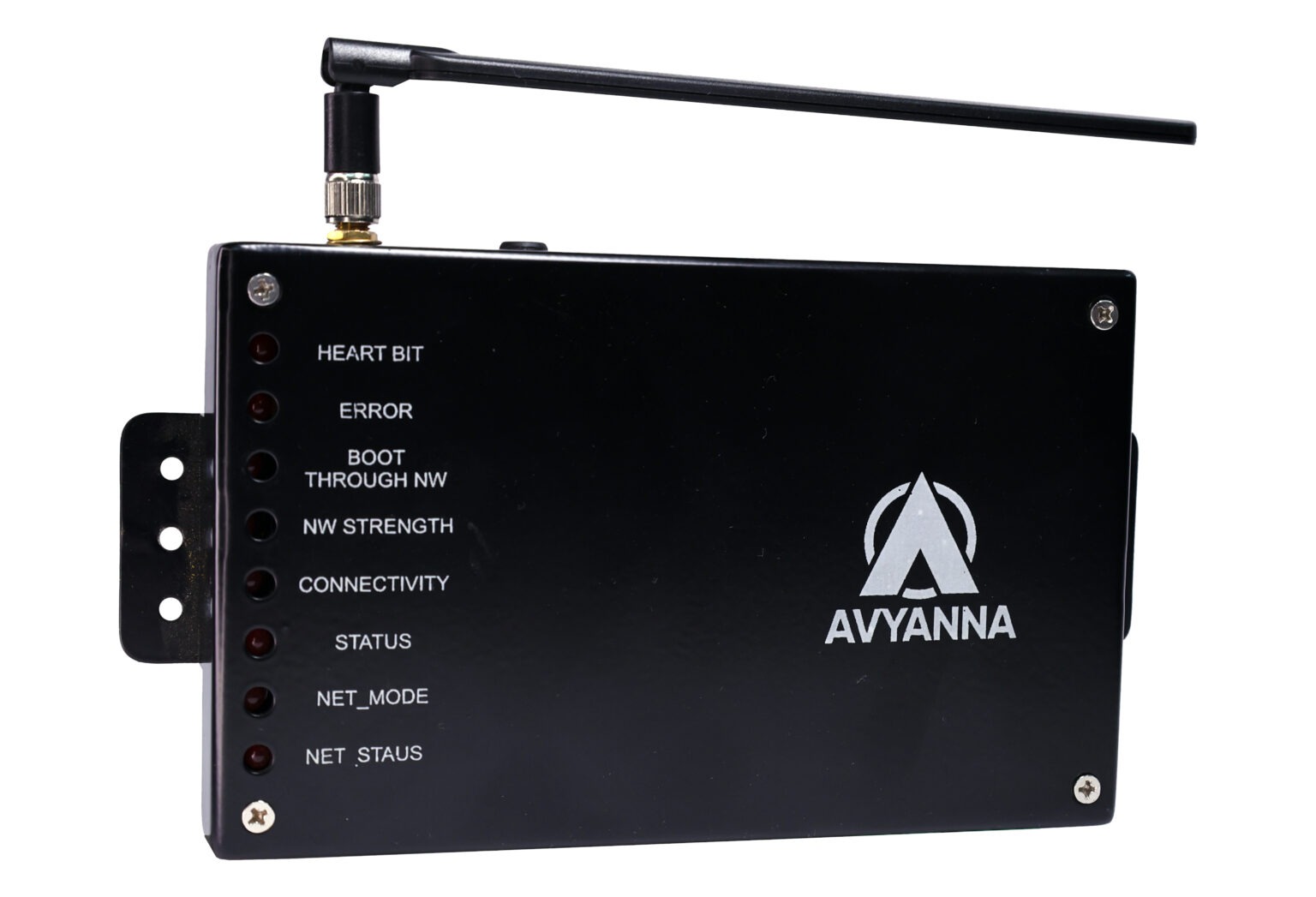
Remote Terminal Unit: What to Look for in an RTU
A remote terminal unit is the field-level hardware that makes monitoring and control possible at sites too remote, too spread out, or too impractical to wire directly into a central SCADA system – oil and gas wellheads, water treatment stations, pipeline monitoring points, remote power substations, and similar unmanned or lightly staffed locations. Unlike equipment installed in a climate-controlled control room, a remote terminal unit often has to operate for years with minimal maintenance, limited power availability, and no one nearby to intervene if something goes wrong.
That operating reality changes what actually matters when selecting one. Processing speed and software features, which dominate the conversation for control room hardware, take a back seat to power efficiency, communication reliability, and environmental durability when a unit is deployed at a remote, unmanned site. Choosing the wrong remote terminal unit for these conditions often means costly site visits just to diagnose or replace hardware that failed prematurely.
This guide covers exactly what to evaluate when selecting a remote terminal unit for remote site monitoring, and how to assess remote terminal unit manufacturers for long-term reliability.
What Is a Remote Terminal Unit and How Is It Different from a PLC?
A remote terminal unit (RTU) is a microprocessor-based field device that monitors sensors, controls actuators, and communicates status and data back to a central SCADA system – often over long distances using radio, cellular, or satellite communication rather than a direct wired connection. While RTUs and PLCs (programmable logic controllers) share some overlapping functionality, RTUs are traditionally built with a stronger emphasis on remote communication and low-power operation, while PLCs are traditionally built with a stronger emphasis on high-speed local control logic.
In practice, many modern devices blur this line, but the core distinction remains relevant when selecting hardware specifically for remote, unmanned monitoring applications.
Key Factors to Look for in a Remote Terminal Unit
1. Power Consumption and Power Source Flexibility
Many remote sites lack access to reliable grid power, relying instead on solar panels, batteries, or a combination of both. A remote terminal unit intended for these sites needs low power consumption and support for a wide range of DC input voltages, along with compatibility with solar charge controllers and battery backup systems. Higher power draw directly translates into larger, more expensive solar and battery infrastructure needed to keep the unit running continuously.
2. Communication Options
Compare available communication methods against what’s actually feasible at your site – cellular (3G/4G/LTE), radio (licensed or unlicensed spectrum), satellite, or a combination for redundancy. Sites with unreliable cellular coverage may require radio or satellite as a primary or backup communication path, making communication flexibility one of the most important specifications to verify before purchase.
3. Environmental Durability
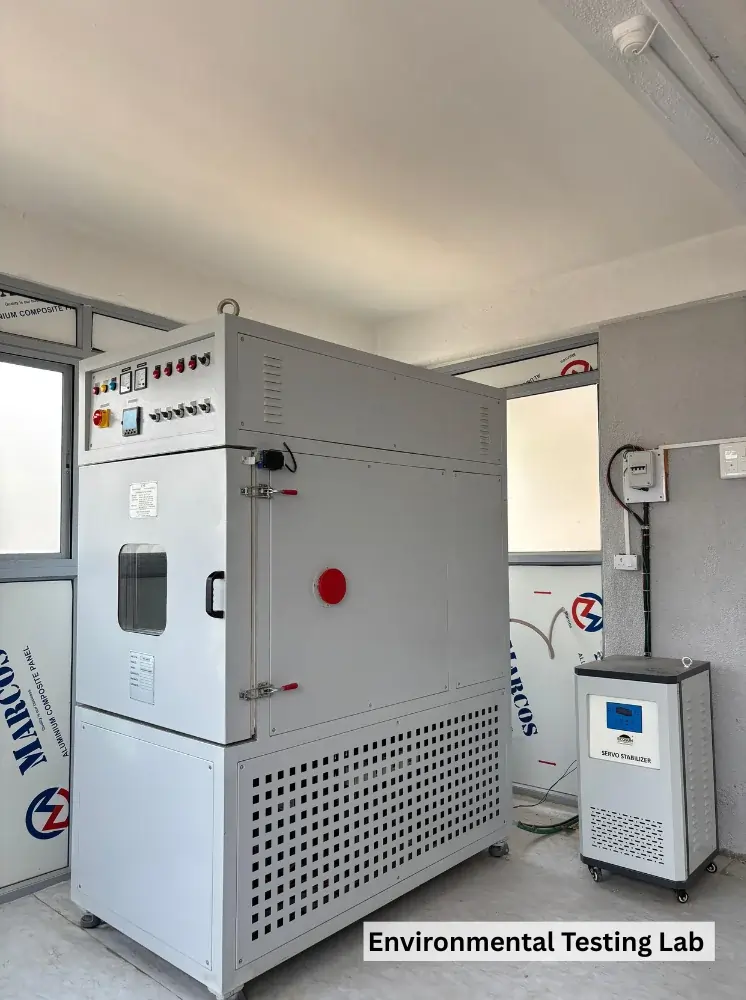
Remote sites are frequently exposed to extreme weather – heat, cold, humidity, dust, and direct sun exposure – without the protection of an indoor enclosure. Look for a remote terminal unit rated for a wide operating temperature range (often -40°C to 70°C for the most demanding outdoor applications) and housed in a sealed, weatherproof enclosure suitable for direct outdoor mounting.
4. I/O Capacity and Expandability
Compare the number and type of analog and digital I/O points supported, matched against your specific monitoring requirements (flow rates, pressure, tank levels, valve status, etc.). Since remote sites are costly to visit for hardware upgrades, prioritize units with expandable I/O capacity to accommodate future sensor additions without requiring a full unit replacement.
5. Local Data Logging and Buffering
Communication links to remote sites can be intermittent, particularly with cellular or radio connections in areas with variable signal strength. A remote terminal unit with local data logging and buffering capability stores collected data during communication outages and transmits it once connectivity is restored, preventing data loss during connectivity gaps.
6. Protocol Support
Confirm the RTU supports the specific SCADA communication protocols your central monitoring system uses – commonly Modbus RTU/TCP, DNP3, or IEC 60870-5-101/104, particularly relevant for utility and municipal applications. Protocol compatibility determines whether the RTU can integrate with your existing SCADA infrastructure without requiring additional protocol conversion hardware.
7. Remote Firmware Update and Diagnostic Capability
Since physical site visits are costly and sometimes logistically difficult, prioritize a remote terminal unit that supports remote firmware updates and diagnostic access over the same communication link used for data reporting. This significantly reduces the need for on-site technician visits for routine maintenance or troubleshooting.
8. Battery Backup and Power Failure Handling
Look for built-in battery backup capability and confirm how the unit handles power interruptions – whether it maintains critical monitoring functions during a power gap, and how it manages data integrity and communication reconnection once power is restored.
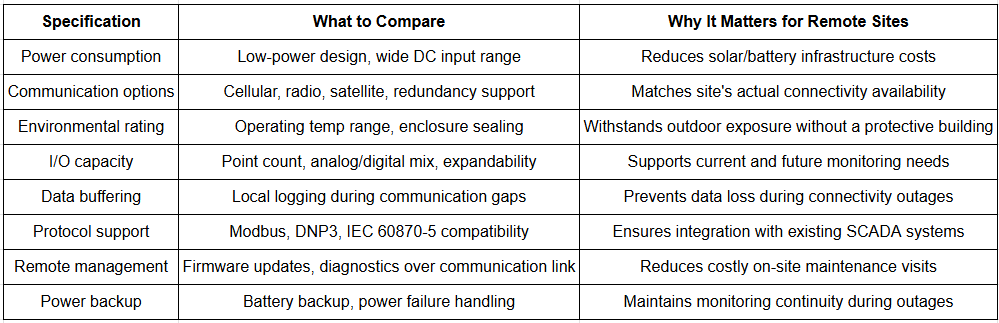
Remote Terminal Unit Specification Comparison Checklist
Common Applications for Remote Terminal Units
- Oil and gas wellhead and pipeline monitoring, tracking pressure, flow, and valve status across remote field locations
- Water and wastewater treatment, monitoring remote pump stations, tanks, and treatment facilities
- Power utility substations, particularly unmanned or lightly staffed remote substations
- Environmental and weather monitoring stations, collecting data from sensors spread across large geographic areas
- Agricultural irrigation systems, monitoring and controlling remote pumping and irrigation infrastructure
- Remote renewable energy sites, monitoring solar farms or wind installations in locations without existing grid infrastructure
How to Evaluate Remote Terminal Unit Manufacturers
The manufacturer behind a remote terminal unit matters significantly for long-term reliability, especially given how costly site visits are for remote deployments. When comparing remote terminal unit manufacturers, evaluate:
- Track record in your specific industry: Manufacturers with proven deployments in oil and gas, water utilities, or power distribution understand the specific durability and protocol requirements those industries demand.
- Communication technology partnerships: Confirm the manufacturer’s cellular or satellite communication options are compatible with carriers and networks available in your deployment region.
- Technical support responsiveness: Since remote deployments often involve remote troubleshooting rather than on-site visits, prioritize manufacturers offering strong remote diagnostic support and documentation.
- Product range and scalability: A manufacturer offering multiple RTU models across different I/O capacities and power requirements allows standardization across a fleet of remote sites without compromising on any single site’s specific needs.
- Long-term firmware and product support: Remote infrastructure projects often span a decade or more; confirm the manufacturer commits to ongoing firmware updates and replacement part availability over that timeframe.
- Local presence and lead times: For facilities managing remote sites across a specific region, working with remote terminal units manufacturers offering local support and faster replacement shipping reduces downtime when hardware issues do occur.
Frequently Asked Questions
What is a remote terminal unit used for? A remote terminal unit is used to monitor sensors and control equipment at remote or unmanned sites – such as oil and gas wellheads, water treatment stations, or power substations – communicating data back to a central SCADA system over cellular, radio, or satellite links.
What is the difference between a remote terminal unit and a PLC? A remote terminal unit is traditionally built with an emphasis on low-power operation and remote communication over long distances, while a PLC is traditionally built with an emphasis on high-speed local control logic, though many modern devices combine capabilities from both categories.
What communication options should a remote terminal unit support? Look for cellular (3G/4G/LTE), radio, and satellite communication options, ideally with redundancy support, to match the specific connectivity available at your remote site and ensure reliable data transmission even if one communication method becomes unavailable.
How important is power consumption when choosing a remote terminal unit? Very important for sites relying on solar or battery power, since a lower-power RTU reduces the size and cost of the solar panel and battery infrastructure needed to keep the unit running continuously without grid power access.
How do I choose between remote terminal unit manufacturers? Compare each manufacturer’s track record in your specific industry, communication technology compatibility with your region, technical support responsiveness, product range for standardization across multiple sites, and long-term firmware and replacement part availability commitments.
Choose Hardware Built for Where It Will Actually Operate
Selecting the right remote terminal unit for remote site monitoring comes down to matching power efficiency, communication reliability, and environmental durability to the realities of unmanned, hard-to-access locations – not simply choosing the unit with the most processing power or the lowest price. The right remote terminal unit manufacturers make these specifications clear and provide the long-term support that remote infrastructure projects require.
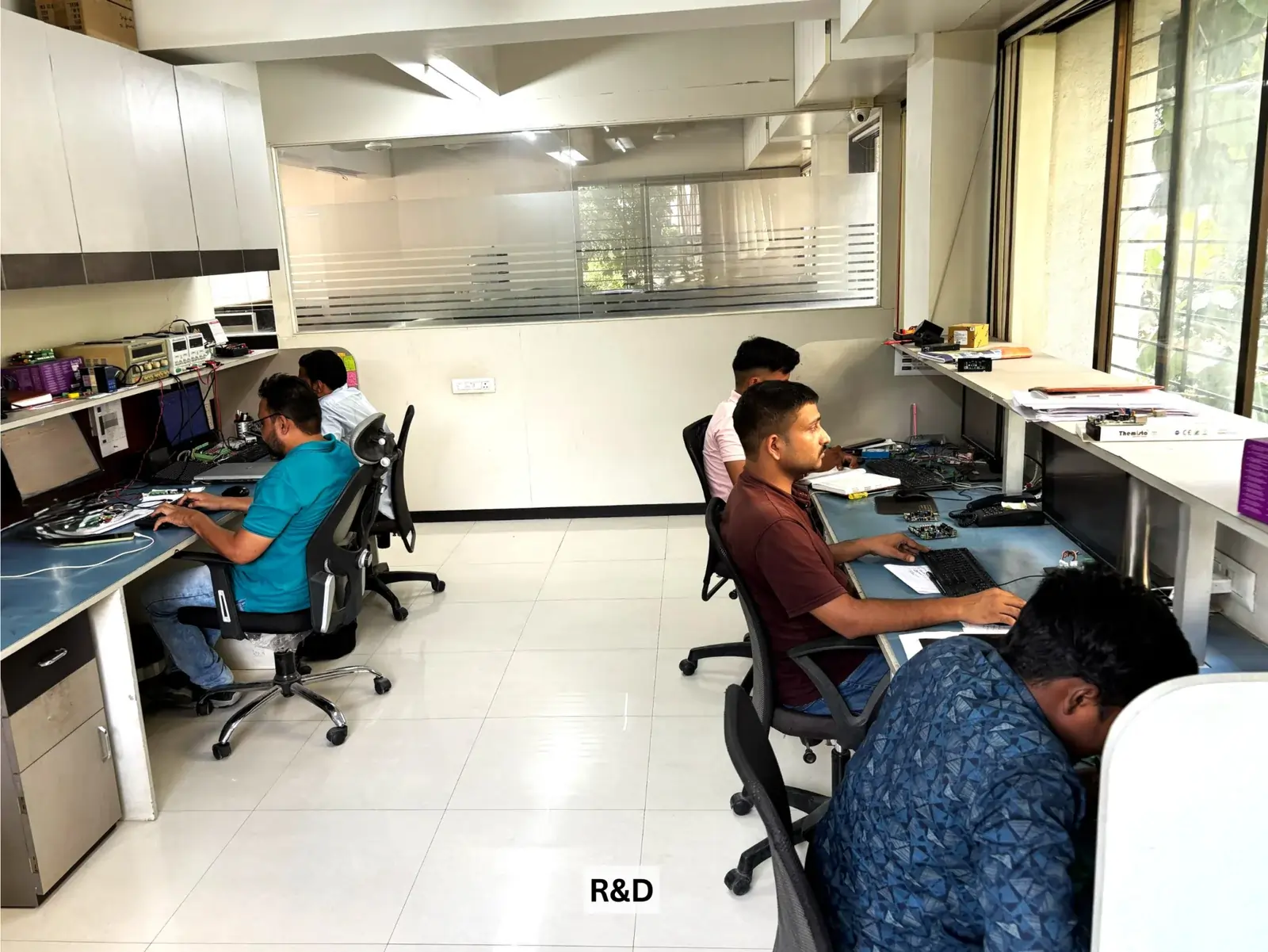
At Avyanna Tech, we help utilities, energy companies, and industrial operators select the right remote terminal unit for their specific site conditions and monitoring requirements. Contact us to explore our full range of remote terminal units and equip your remote sites with hardware built to operate reliably without constant on-site attention.



[email protected]