
Industrial Keyboard Selection Guide: Choosing the Right Keyboard for Harsh Work Environments
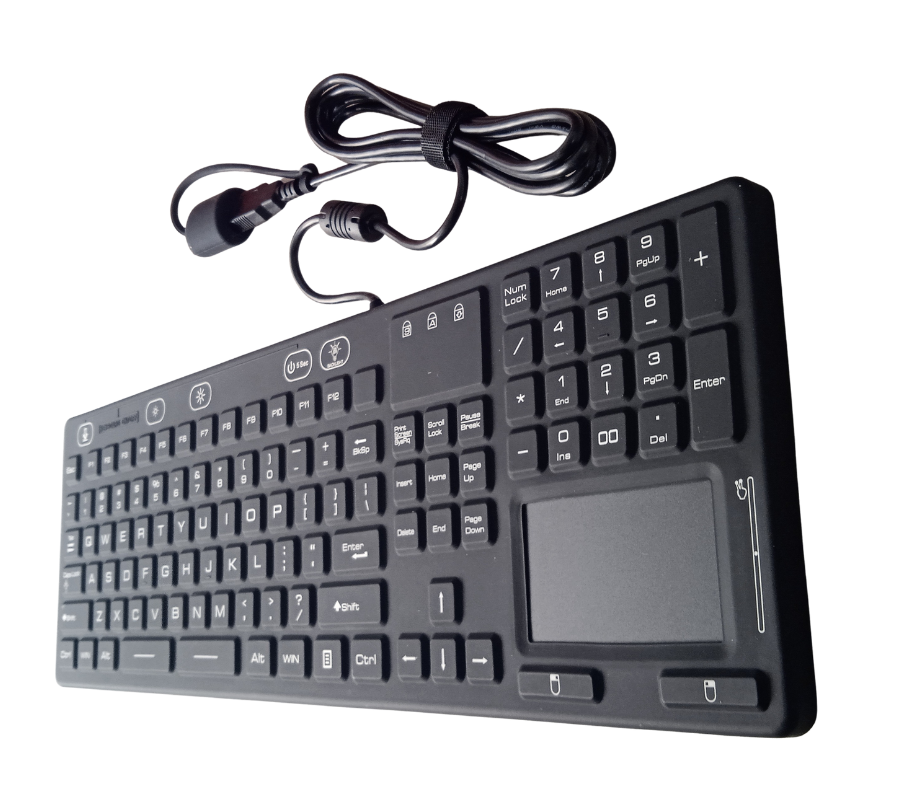
Industrial Keyboard Selection Guide for Harsh Environments
When operating in demanding industrial environments-from manufacturing floors to chemical plants and outdoor construction sites-your peripheral hardware must withstand conditions that would destroy standard office equipment. An industrial keyboard isn’t just a luxury upgrade; it’s a critical investment in workplace efficiency, safety, and equipment longevity. This comprehensive guide walks you through everything you need to know about selecting the right industrial keyboard for your harsh work environment, exploring industrial PC keyboard options, industrial keypads, and keyboards featuring integrated touchpad functionality to enhance your operational capabilities.
What Exactly Is an Industrial Keyboard?
An industrial keyboard is specialized input hardware engineered specifically for harsh, demanding work environments. Unlike consumer-grade keyboards designed for climate-controlled offices, industrial keyboards feature reinforced construction, enhanced durability ratings, and performance characteristics that handle extreme conditions including temperature fluctuations, moisture exposure, dust contamination, chemical splashes, and physical shock.
These keyboards typically meet military and industrial standards such as IP65/IP67 (ingress protection ratings), IEC standards, and NEMA classifications. They’re designed to deliver reliable performance whether you’re operating in food processing facilities, automotive manufacturing plants, healthcare environments, logistics centers, or outdoor industrial settings where temperature extremes and environmental contaminants are constant concerns.
Key Features That Distinguish Industrial Keyboards
Ingress Protection (IP) Ratings
The IP rating system is fundamental to understanding industrial keyboard durability. An IP67-rated industrial keyboard means:
- First digit (6): Complete protection against dust ingress
- Second digit (7): Protection against temporary immersion in water
Most industrial keyboards range from IP64 to IP67, with IP67 being ideal for washdown environments. IP65-rated keyboards prevent water jets from damaging internal components, making them suitable for less severe moisture exposure.
Material Composition and Build Quality
Industrial keyboards utilize:
- Silicone or polyurethane overlays that provide seamless, crevice-free surfaces
- Stainless steel or aluminum housings resistant to corrosion and chemical degradation
- Reinforced keycaps with embedded mechanical switches engineered for millions of keystrokes
- Sealed connectors that prevent moisture and particulates from entering connection points
These materials resist oils, solvents, aggressive cleaning chemicals, and extreme temperature variations from -20°C to 70°C in many cases.
Antimicrobial Properties
For healthcare, food processing, and pharmaceutical applications, industrial keyboards often feature:
- Antimicrobial coatings that inhibit bacterial and fungal growth
- Smooth surfaces that facilitate thorough sanitization
- FDA-approved materials for food-contact environments
Types of Industrial Keyboards: Finding Your Perfect Match
Full-Size Industrial Keyboards
Full-size industrial keyboards replicate the standard QWERTY layout with numeric keypads, function keys, and navigation clusters. They’re ideal for data entry roles, administrative tasks in manufacturing facilities, and applications requiring extended periods of typing. Operators appreciate the familiar layout and ergonomic spacing that reduces fatigue during long shifts.
Industrial PC Keyboards with Compact Designs
For workstations with limited space or mounting requirements, compact industrial PC keyboards eliminate unnecessary keys while maintaining critical functions. These models work excellently in tight manufacturing environments, vehicle cabs, and integrated control panel installations where space is premium.
Industrial Keypads
Industrial keypads are specialized input devices featuring fewer keys, typically arranged in numeric, function-specific, or custom layouts. Common applications include:
- Numeric keypads for inventory management and barcode data entry
- Programmable keypads with customizable buttons for specific industrial applications
- Backlighting options for low-visibility environments and nighttime operations
Industrial keypads excel in focused, repetitive data entry tasks and reduce cognitive load by displaying only necessary controls.
Industrial Keyboards with Integrated Touchpad
An industrial keyboard with touchpad combines full-keyboard functionality with cursor control, eliminating the need for separate mice-a significant advantage in contamination-sensitive environments. These integrated solutions reduce clutter, minimize additional entry points for contaminants, and provide comprehensive input control from a single device. This category represents a growing preference in modern industrial settings where space efficiency and equipment consolidation matter.
Environmental Factors: Why Standard Keyboards Fail
Temperature and Humidity Extremes
Standard keyboards use plastic housings and conventional components that become brittle in freezing conditions and degrade rapidly in high-humidity environments. Industrial keyboards utilize cold-resistant polymers and humidity-sealed assemblies that maintain functionality across temperature ranges that would incapacitate conventional equipment.
Chemical Exposure
Manufacturing environments expose equipment to oils, solvents, cleaners, and process chemicals. Industrial keyboards feature chemically resistant coatings and materials engineered to withstand exposure to:
- Cutting fluids and hydraulic oils
- Alkaline and acidic cleaning solutions
- Petroleum-based solvents
- Food processing sanitizers
Vibration and Shock Resistance
Heavy machinery generates constant vibration that can damage standard keyboards. Industrial keyboards incorporate shock-absorbing mounting systems, reinforced internal components, and key switches engineered to withstand millions of activation cycles despite mechanical stress.
Dust and Particulate Contamination
Workshop environments generate metal shavings, textile fibers, dust particles, and airborne debris. The sealed construction of industrial keyboards prevents these contaminants from lodging beneath keycaps or entering electronic components, where they would cause failures.
Industry-Specific Applications and Requirements
Manufacturing and Machining
Production floors demand keyboards that survive:
- Coolant and cutting fluid exposure
- Frequent hand contact while wearing gloves
- Vibration from CNC machines and presses
- Rapid temperature changes from heated and refrigerated zones
Recommended features: Glove-friendly keys, IP67 rating, stainless steel construction, backlighting for shop floor visibility.
Food and Beverage Processing
Food production environments require:
- Daily washdown capabilities with high-pressure water jets
- Antimicrobial surfaces to prevent cross-contamination
- FDA-compliant, food-safe materials
- Seamless surfaces that eliminate bacterial harboring locations
Recommended features: IP67 rating, antimicrobial coating, NSF certification, hospital-grade construction.
Automotive and Transportation
Vehicle assembly and maintenance environments need:
- Extreme vibration tolerance
- Chemical resistance to fuel, coolants, and detergents
- Wide operating temperature range
- Durability under heavy-gloved operation
Recommended features: Heavy-duty switches, reinforced keycaps, oversized keys, sealed connections.
Healthcare and Laboratory Settings
Medical and laboratory facilities require:
- High-frequency sterilization compatibility
- Chemical compatibility with disinfectants
- Antimicrobial surface treatment
- Compliance with healthcare safety standards
Recommended features: Autoclavable materials, antimicrobial coating, smooth seamless design, IP65+ rating.
Outdoor and Extreme Weather Environments
Construction sites, mining operations, and outdoor industrial settings demand:
- Extreme temperature tolerance (-20°C to 60°C+)
- Water and dust ingress protection
- UV-resistant materials
- High visibility backlighting for varying light conditions
Recommended features: Extended temperature range, IP67 rating, bright backlighting, corrosion-resistant housing.
Selection Criteria: Your Industrial Keyboard Decision Framework
1. Environmental Assessment
Begin by thoroughly evaluating your specific environment:
- What temperature extremes will the keyboard face?
- What moisture levels exist (humid, washdown-prone, or waterproof)?
- What chemical exposure is likely?
- What particulate matter is present?
- What vibration levels does machinery generate?
2. Durability and Longevity
Evaluate:
- Key switch durability ratings (typically 10-20 million keystrokes minimum)
- Material warranty periods (3-5 years is standard for quality industrial keyboards)
- Mean Time Between Failures (MTBF) specifications
- Component replacement availability for long-term serviceability
3. Ergonomic Considerations
Even in harsh environments, operator comfort matters:
- Do gloved operators need larger, more widely spaced keys?
- Is wrist rest support necessary for extended typing sessions?
- Should you prioritize backlighting for low-light conditions?
- Does the keyboard height and angle suit your workstation setup?
4. Connectivity Options
Consider your infrastructure:
- USB connections offer reliability and power delivery
- PS/2 legacy connections suit older industrial systems
- Wireless options (increasingly common and robust) require RF security and interference immunity
- Custom connectors may be necessary for integrated panel installations
5. Programmability and Customization
Some industrial keyboards offer:
- Programmable keys for frequently used command sequences
- Remappable buttons to suit specific workflows
- Macro recording for repetitive operations
- Lighting customization and user profiles
6. Maintenance and Cleanability
Evaluate:
- Can the keyboard withstand daily washdowns and sanitization?
- Are replacement key tops readily available?
- Can you easily disassemble critical components for deep cleaning?
- Does the design eliminate crevices where contaminants could accumulate?
Comparing Industrial Keypads vs. Full Keyboards
When to Choose an Industrial Keypad
Industrial keypads offer advantages for:
- Specialized data entry tasks requiring only numeric or function keys
- Space-constrained environments where full keyboard real estate isn’t available
- Single-purpose applications like barcode scanning data entry
- Integration into control panels and machine interfaces
- Reducing operator error by displaying only relevant controls
When Full Keyboards Are Essential
A complete industrial PC keyboard is preferable for:
- General-purpose computing and multi-application environments
- Administrative and office-based industrial tasks
- Complex data entry requiring alpha-numeric characters
- Operator preference for familiar QWERTY layout
- Applications lacking specialized key mapping requirements
The Advantage of Industrial Keyboards with Touchpad Integration
Modern industrial environments increasingly favor keyboards with integrated touchpad functionality because they:
- Reduce workspace footprint by eliminating separate mouse devices
- Minimize contamination vectors by reducing the number of devices and connection points
- Lower total cost of ownership through consolidated hardware
- Improve usability in gloved operation scenarios where small mouse targets are problematic
- Enhance portability for mobile workstations and vehicle-mounted systems
- Simplify cable management in already-crowded industrial control panels
An industrial keyboard with touchpad represents the convergence of functionality and practical engineering for modern manufacturing and logistics environments.
Installation, Maintenance, and Best Practices
Proper Installation
- Use appropriate mounting hardware designed for vibration environments
- Route cables away from moving machinery to prevent damage
- Ensure adequate ventilation around keyboard housings
- Position for optimal ergonomics with proper height and angle
- Secure connections firmly to prevent accidental disconnection during operation
Regular Maintenance Protocols
- Daily: Wipe surfaces with appropriate cleaning materials (consult specifications for specific environments)
- Weekly: Check for debris accumulation in any gaps or vents
- Monthly: Verify all connections remain secure and inspect for visible damage
- Quarterly: Deep clean according to manufacturer guidelines; replace any deteriorated key tops
- Annually: Full inspection and replacement of any worn components
Environmental Protective Measures
- Use protective covers when equipment is idle in extreme environments
- Store in climate-controlled spaces when possible during non-operating periods
- Implement preventative maintenance schedules to catch issues before they become failures
- Document performance patterns to anticipate replacement timing
Frequently Asked Questions About Industrial Keyboards
How long typically lasts an industrial keyboard in a harsh environment?
With proper maintenance, quality industrial keyboards last 5-7 years in severe environments, compared to 2-3 years for consumer keyboards. Key switch durability ratings of 10-20 million keystrokes typically translate to 3,000-5,000 hours of heavy use.
Can industrial keyboards be customized for specific applications?
Yes. Many manufacturers offer custom layouts, programmable keys, and specialized key arrangements for specific industrial applications. Custom options typically require minimum order quantities and longer lead times.
What’s the typical cost premium for industrial keyboards versus standard keyboards?
Industrial keyboards typically cost 3-8 times more than consumer-grade keyboards, reflecting enhanced durability, specialized materials, and rigorous testing. However, reduced replacement frequency and downtime avoidance provide rapid ROI in industrial settings.
Are wireless industrial keyboards reliable in manufacturing environments?
Modern wireless industrial keyboards offer excellent reliability with frequency-hopping technology, interference immunity, and redundant connectivity protocols. They require regular battery maintenance and environmental testing to verify RF performance in your specific facility.
What certifications should I verify when selecting an industrial keyboard?
Look for IP ratings (IP65/IP67 minimum), IEC 61000 EMI/RFI immunity testing, FCC/CE compliance, and industry-specific certifications (NSF for food service, FDA for pharmaceutical). Military standards (MIL-STD) indicate additional durability.
Can industrial keyboards work with standard industrial PC systems?
Yes. Quality industrial keyboards connect via standard USB, PS/2, or wireless protocols compatible with any industrial PC or control system. Verify connector compatibility with your specific equipment before purchase.
How do I know if my current keyboard needs replacement?
Watch for key sticking, unresponsive keys, visible material degradation, intermittent connectivity, or visible moisture ingress. In harsh environments, proactive replacement before failure is more cost-effective than emergency equipment changes.
Conclusion: Making Your Industrial Keyboard Investment
Selecting the right industrial keyboard is a strategic decision that impacts operational efficiency, equipment reliability, and workplace safety. An industrial keyboard engineered for your specific environment eliminates failures that disrupt production, reduce costly downtime, and improve operator productivity.
Whether you need a rugged industrial PC keyboard for general computing, a specialized industrial keypad for focused data entry, or an innovative industrial keyboard with touchpad for integrated control, the key is matching equipment capabilities to environmental demands. Prioritize IP ratings appropriate to your moisture exposure, material composition suited to chemical environments, and durability ratings that reflect your operational intensity.
Avyanna Tech specializes in industrial input solutions engineered for the world’s most demanding work environments. Our industrial keyboards combine military-grade durability with intuitive design, ensuring reliable performance whether you operate in food processing facilities, manufacturing plants, automotive assembly lines, or extreme outdoor conditions.
Don’t let inadequate input devices compromise your industrial operations. Invest in an industrial keyboard designed for your harsh work environment, and experience the reliability, durability, and performance that professionals demand.


[email protected]