
Serial to Ethernet Converter: The Smart Bridge Between Legacy Systems and Modern Networks
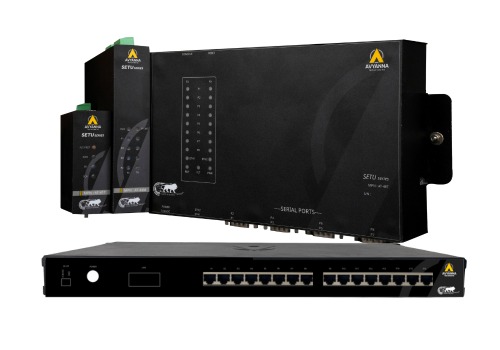
Serial to Ethernet Converter for Legacy Integration
In today’s fast-evolving industrial landscape, businesses are upgrading to Ethernet-based communication systems. But what about the thousands of machines still running on serial communication (RS232, RS485, RS422)?
This is where a serial to ethernet converter becomes essential, acting as a digital bridge between legacy devices and modern networks.
What Is a Serial to Ethernet Converter?
A serial to ethernet converter (also called a serial device server) is a device that converts serial data into Ethernet (TCP/IP) packets and vice versa.
This allows traditional serial devices like:
- PLCs
- Sensors
- Barcode scanners
- CNC machines
to communicate over modern IP networks without replacing existing infrastructure.
Why Industries Still Need Serial Connectivity
Many industrial environments still rely on serial-based systems because they are:
- Proven and reliable
- Cost-effective to maintain
- Deeply integrated into operations
Instead of replacing them, companies use a serial to ethernet converter to modernize communication while preserving existing investments.
How a Serial to Ethernet Converter Works
The process is simple but powerful:
- Receives serial data from devices (RS232/RS485/RS422)
- Converts it into TCP/IP packets
- Sends data over Ethernet network
- Converts it back to serial at the destination
This enables two-way communication between legacy machines and modern systems.
Serial Device Server vs Modbus Gateway
When exploring solutions, you’ll often come across two types:
Serial Device Server (Transparent Mode)
- Transfers serial data over Ethernet without changing protocol
- Ideal for simple communication needs
Modbus Gateway
- Converts Modbus RTU (serial) to Modbus TCP (Ethernet)
- Used in automation systems like SCADA and PLC networks
Both are part of modern serial to ethernet converter solutions, depending on your application.
Real-World Applications
A serial to ethernet converter is widely used in:
- Industrial automation
- Manufacturing plants
- Building management systems
- Energy and utility monitoring
- Machine-to-machine (M2M) communication
It enables:
- Remote monitoring
- Centralized control
- Long-distance communication over networks
Introducing Avyanna Tech’s Solution
At Avyanna Tech, the SETU Series – Modbus Gateway & Serial Device Server is designed to simplify industrial communication.
Explore here: https://avyannatech.com/modbus-gateway-serial-device-server/
What Makes SETU Series Different?
- Seamless serial to Ethernet integration
- Supports both transparent communication and Modbus conversion
- Enables real-time data exchange across systems
- Helps industries move toward Industry 4.0 and IoT-ready networks
- Ensures stable, long-term industrial performance
Key Benefits for Businesses
Extend Life of Legacy Equipment: No need to replace working machines, just connect them to modern networks.
Enable Remote Access: Monitor and control devices from anywhere via Ethernet.
Improve Data Visibility: Get real-time insights for better decision-making.
Cost-Effective Modernization: Upgrade communication without major infrastructure changes.
When Should You Use a Serial to Ethernet Converter?
You should consider it if:
- Your machines use RS232 / RS485 communication
- You want to connect devices to SCADA / cloud systems
- You need remote monitoring or centralized control
- You are upgrading to Industry 4.0
Conclusion
A serial to ethernet converter is not just a connectivity device; it’s a strategic upgrade tool.
With solutions like Avyanna Tech’s SETU Series, industries can:
- Bridge old and new technologies
- Improve efficiency
- Enable smart automation
Without replacing existing systems.

[email protected]