7 Signs Your Factory Needs a Remote I/O Module Upgrade
7 Signs Your Factory Needs a Remote I/O Module Upgrade
If your factory floor has grown, changed, or added new machines over the years, chances are your I/O setup hasn’t kept pace. A lot of plants are still running on wiring and hardware decisions made a decade ago, and that gap quietly costs money every single day. A remote I/O module is one of those unglamorous components that rarely gets attention until something breaks. But once you start noticing certain patterns – slow data, wiring headaches, or machines that just won’t talk to each other; it’s usually a sign that your I/O layer needs a serious look.
In this article, we’ll walk through seven practical warning signs, explain why they matter, and show you what a modern upgrade actually looks like.
What Is a Remote I/O Module?
A remote I/O module is a field device that collects signals from sensors, switches, or machines and sends that data to a controller using industrial communication protocols such as Modbus RTU or Modbus TCP.
Instead of running long cable runs back to a central control panel, you install the I/O module close to the equipment itself. This cuts down on wiring, reduces electrical noise, and makes it far easier to scale up when you add new machines.
In short, an input output module acts as a bridge; it takes real-world signals (temperature, pressure, motor status, and so on) and turns them into data your PLC or SCADA system can actually use.
Why Upgrading Matters in Modern Factories
Factory automation has changed a lot. Plants today depend on real-time monitoring, distributed I/O architecture, and Ethernet-based communication to keep production visible and responsive.
An outdated I/O setup doesn’t just slow down data – it limits your ability to expand, troubleshoot, or integrate with newer PLC and SCADA platforms. And in industries where downtime is expensive, that limitation adds up fast.
Upgrading isn’t about chasing the newest technology for its own sake. It’s about making sure your data acquisition layer can actually support the way your plant operates today.
7 Signs Your Factory Needs a Remote I/O Module Upgrade
1. You’re Still Running Long Wire Runs to a Central Panel
If technicians are pulling cable across the entire shop floor every time a new sensor gets added, that’s a red flag. Long wiring runs are expensive to install, harder to maintain, and more prone to signal loss or interference.
A remote I/O module solves this by sitting close to the machine itself, so only a short communication cable – not dozens of individual signal wires – needs to travel back to the control room.
2. Adding New Equipment Means Redesigning the Whole Panel
Factories grow. New machines get added, production lines get reconfigured, and sensors multiply. If every change means opening up the control panel and rewiring things from scratch, your I/O system isn’t built for scalability.
Modern I/O modules are designed for scalable signal expansion – you add more input or output points as needed, without tearing apart your existing setup.
3. Your PLC or SCADA System Struggles to Communicate with Field Devices
Communication gaps between field devices and your controller usually point to outdated or incompatible I/O hardware. This shows up as delayed readings, dropped signals, or devices that simply don’t “see” each other on the network.
Reliable I/O modules that support trusted protocols like Modbus RTU and Modbus TCP make this integration far smoother, since most PLC and SCADA platforms are already built to work with these standards.
4. You’re Dealing with Frequent Signal Noise or Interference
In harsh industrial environments – near motors, VFDs, or heavy machinery – electrical noise can distort signals traveling over long analog wires. If your readings are inconsistent or your team keeps chasing false alarms, noise is often the culprit.
Features like galvanic isolation help protect signal integrity by electrically separating field devices from the controller, reducing the impact of interference and improving overall safety.
5. Your Plant Still Relies Only on Serial Communication
Serial Modbus RTU communication has served industries reliably for years, and it’s still a solid choice for many applications. But as plants move toward Ethernet-based networking for faster, more flexible data exchange, sticking exclusively to serial setups can start to feel limiting.
If you’re planning for better connectivity across multiple systems, an Ethernet remote I/O module using Modbus TCP over standard Ethernet communication opens up more integration options.
6. You Can’t Get Real-Time Visibility Into Machine Data
Modern factory automation depends on real-time monitoring – knowing exactly what’s happening on the floor as it happens, not minutes later. If your current I/O setup introduces lag or requires manual checks, you’re losing the visibility that helps prevent costly downtime.
Distributed I/O architecture, where modules are placed near equipment and communicate continuously with the controller, is built specifically to close this gap.
7. Your I/O Modules Can’t Handle Different Sensor Types
Every plant has a mix of signal types – analog, digital, RTD, and thermocouple inputs, depending on what’s being measured. If your current modules only support one or two signal types, you end up needing extra hardware or workarounds just to bring in a new sensor.
A flexible input output module that supports multiple sensor types in one system simplifies integration and reduces the number of devices you need to manage.
Benefits of Upgrading to Modern Ethernet Remote I/O Modules
Making the shift to Ethernet-based remote I/O brings a few practical advantages:
- Simpler scalability – add signal points without redesigning panels.
- Lower wiring and installation costs – place modules near equipment instead of running long cable back to a central panel.
- Better industrial networking – Modbus TCP over Ethernet communication supports smoother integration with modern PLC and SCADA systems.
- Broader sensor compatibility – analog, digital, RTD, and thermocouple signals all integrate through the same platform.
- Improved reliability – galvanic isolation and automatic data direction control support signal integrity even in demanding industrial settings.
Together, these benefits make it easier to run a connected, data-driven plant without constantly reworking your infrastructure.
Why Choose Avyanna Tech
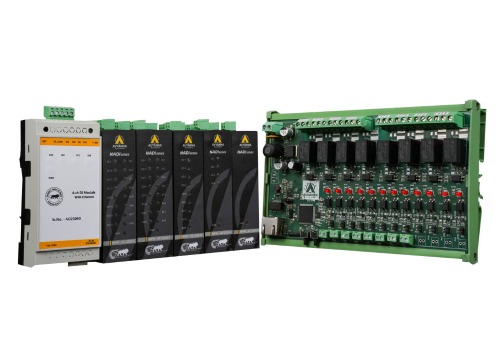
Avyanna Tech designs remote I/O solutions built specifically for industrial automation, offered across two product families: the Tantu Series (Serial Remote I/O Modules using Modbus RTU) and the Nadi Series (Ethernet Remote I/O Modules using Modbus TCP).
Both series support Modbus RTU/TCP protocols for easy integration with existing control systems, and include galvanic isolation along with automatic data direction control to help maintain signal integrity and safety in harsh industrial environments.
As one of the established remote I/O manufacturers in India, Avyanna Tech works with manufacturing plants, process industries, machine automation setups, packaging systems, utility monitoring, and building automation projects – helping teams choose the right I/O configuration for analog, digital, RTD, or thermocouple connections.
Being an experienced IO module manufacturer, Avyanna Tech also supports OEMs and system integrators who need dependable, industrial-grade hardware backed by local manufacturing and technical guidance.
Conclusion
An outdated I/O setup can quietly hold back your entire plant – from wiring costs to visibility gaps to integration headaches. If any of the seven signs above sound familiar, it’s worth taking a closer look at your current system before small inefficiencies turn into bigger downtime problems.
The right remote I/O module doesn’t just collect data – it makes your whole automation setup easier to scale, monitor, and maintain. Explore Avyanna Tech’s Serial and Ethernet remote I/O solutions and get guidance on choosing the right configuration for your plant.
Frequently Asked Questions
1. What is a remote I/O module used for?
A remote I/O module collects signals from sensors and machines on the factory floor and sends that data to a PLC or SCADA system using protocols like Modbus RTU or Modbus TCP, without requiring long wiring runs back to a central panel.
2. What’s the difference between serial and Ethernet remote I/O modules?
Serial remote I/O modules communicate using Modbus RTU, while Ethernet remote I/O modules use Modbus TCP over standard Ethernet communication, generally offering faster and more flexible integration with modern control systems.
3. How do I know if my factory needs an I/O module upgrade?
Common signs include long wiring runs, panel redesigns every time equipment is added, communication gaps with your PLC or SCADA system, frequent signal noise, and limited support for different sensor types.
4. Can one input output module support multiple sensor types?
Yes. Many modern I/O modules, including Avyanna Tech’s Tantu and Nadi series, are designed to handle analog, digital, RTD, and thermocouple connections within the same system.
5. Why should I choose an Indian remote I/O manufacturer?
Working with remote I/O manufacturers in India, like Avyanna Tech, often means easier access to technical support, faster turnaround, and locally manufactured, industrial-grade hardware suited to Indian plant conditions.



[email protected]