Why RS232 to RS485 Converters Are Essential in Modern Smart Factories
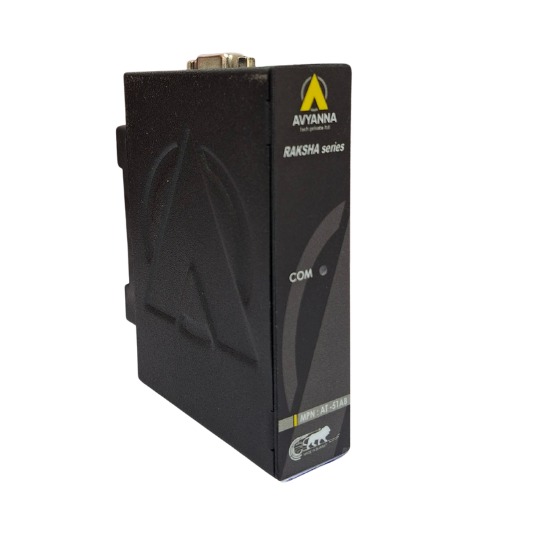
RS232 to RS485 Converter for Smart Factories
In today’s era of Industry 4.0, smart factories rely heavily on seamless communication between machines, sensors, and control systems. However, many industrial setups still use legacy communication protocols like RS232, which are not ideal for long-distance or noise-prone environments.
This is where an rs232 to rs485 converter becomes essential.
In this blog, we’ll explore why these converters are critical in modern smart factories and how solutions like Avyanna Tech’s Raksha Series Converters enable reliable industrial communication.
Understanding the Communication Challenge in Smart Factories
Modern factories integrate:
- PLCs (Programmable Logic Controllers)
- SCADA systems
- Sensors and actuators
- Industrial PCs
Many of these systems use different communication standards. While RS232 is widely used in legacy equipment, it has limitations:
- Short communication distance
- Poor noise immunity
- Limited multi-device connectivity
This creates a major bottleneck in smart factory environments.
What is an RS232 to RS485 Converter?
An rs232 to rs485 converter is a device that converts RS232 signals into RS485 signals, enabling:
- Long-distance communication
- Multi-device networking (multi-drop)
- Better noise resistance
This conversion allows legacy devices to seamlessly integrate into modern industrial networks.
Why RS232 to RS485 Converters Are Essential in Smart Factories
1. Enables Long-Distance Communication
RS232 communication is limited to short distances, making it unsuitable for large factory floors.
With an rs232 to rs485 converter:
- Communication can extend over long distances
- No signal degradation
- Stable data transmission across the plant
2. Improves Noise Immunity
Industrial environments are full of electrical noise from motors, drives, and heavy machinery.
RS485 offers:
- Differential signaling
- High resistance to electromagnetic interference
This ensures uninterrupted communication in harsh conditions.
3. Supports Multiple Devices on One Network
RS232 allows only point-to-point communication. In contrast, RS485 supports multiple devices on a single bus.
Benefits include:
- Reduced wiring complexity
- Cost-effective installations
- Easy scalability
4. Integrates Legacy Systems with Modern Automation
Smart factories don’t replace all old machines at once. Many legacy systems still operate using RS232.
An rs232 to rs485 converter helps:
- Extend the life of existing equipment
- Avoid costly upgrades
- Enable smooth digital transformation
5. Enhances Reliability in Critical Operations
In automation, even a small communication failure can lead to downtime.
Using RS485 via converters ensures:
- Stable data flow
- Reduced communication errors
- Improved system reliability
Applications in Smart Factories
RS232 to RS485 converters are widely used in:
- PLC communication systems
- SCADA monitoring systems
- CNC machines
- Industrial sensors and data acquisition
- Building Management Systems (BMS)
Avyanna Tech’s Raksha Series Converters
Avyanna Tech offers high-quality industrial communication solutions through its Raksha Series Converters, designed for robust and reliable performance.
Key Products:
- RS-232 to RS-485 Converter (MPN: AT-5IABG / AT-5IABO)
- Wireless Slave Nodes
- DC-DC Buck Converter Power Supply (24V to 5V)
- Voltage to Current Module (0-5V to 4-20mA)
These solutions are built to meet the demands of modern industrial environments.
Key Features of Avyanna Converters
- Industrial-grade design
- High noise immunity
- Reliable long-distance communication
- Easy integration with existing systems
- Compact and durable build
Choosing the Right RS232 to RS485 Converter
When selecting a converter, consider:
- Communication distance requirements
- Industrial environment conditions
- Compatibility with existing devices
- Build quality and reliability
Avyanna Tech’s solutions are designed to meet these criteria for industrial applications.
Future of Industrial Communication
As smart factories continue to evolve, the need for reliable communication infrastructure will only increase.
Even in advanced systems, the rs232 to rs485 converter remains relevant by:
- Bridging legacy and modern technologies
- Supporting scalable industrial networks
- Ensuring uninterrupted operations
Conclusion
The rs232 to rs485 converter is not just a connectivity tool; it’s a critical component for building efficient, scalable, and reliable smart factories.
With solutions like Avyanna Tech’s Raksha Series, industries can ensure seamless communication, reduced downtime, and smooth automation integration.

[email protected]