How Does an RS232 to RS485 Converter Improve Signal Reliability?
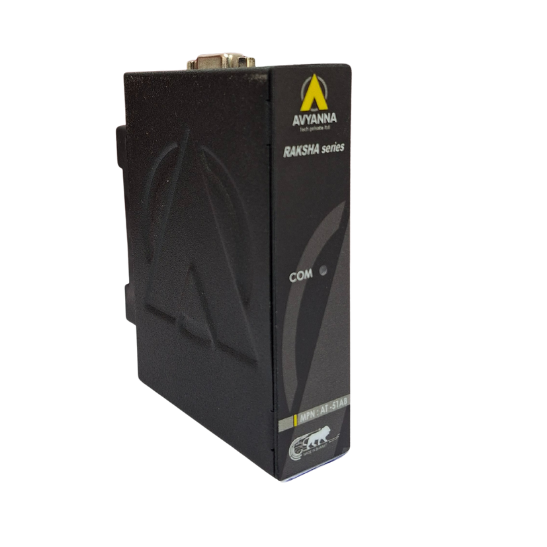
RS232 to RS485 Converter for Reliable Communication
In industrial communication, signal integrity is everything. Whether you’re connecting PLCs, sensors, HMIs, or legacy equipment, communication failures can lead to downtime, data errors, and costly disruptions. That’s where an RS232 to RS485 Converter becomes essential.
By converting single-ended RS232 signals into robust differential RS485 signals, this device dramatically improves communication reliability over long distances and in electrically noisy environments. For industries in Pune and across India, it remains a practical and cost-effective solution for modernizing serial communication networks.
Understanding RS232 and RS485 Communication
Before exploring the benefits, it helps to understand the difference between these two communication standards.
What Is RS232?
RS232 is one of the oldest serial communication protocols. It is commonly used for short-distance, point-to-point communication between devices such as computers, printers, and industrial controllers.
Limitations of RS232:
- Maximum cable length is typically around 15 meters
- Supports only one-to-one communication
- More susceptible to electrical noise and interference
- Less reliable in industrial environments
What Is RS485?
RS485 is designed specifically for industrial and long-distance communication.
Advantages of RS485:
- Supports cable lengths up to 1,200 meters
- Allows multiple devices on the same network
- Excellent noise immunity
- Ideal for harsh industrial environments
- Reliable data transmission over long distances
How an RS232 to RS485 Converter Works
An RS232 to RS485 Converter acts as a bridge between devices using different communication protocols. It converts the single-ended voltage signals of RS232 into differential signals used by RS485.
Differential signaling transmits data using two complementary signals. The receiving device reads the difference between these signals rather than relying on a single reference point. This makes the communication far less vulnerable to external electrical interference.
Key Ways It Improves Signal Reliability
1. Superior Noise Immunity
Industrial environments often contain electrical noise from motors, drives, relays, and power systems. RS232 signals can easily be disrupted by this interference.
RS485 uses differential signaling, which effectively cancels out common-mode noise. As a result, data remains accurate even in electrically noisy settings.
2. Longer Transmission Distances
RS232 is limited to short cable runs. Beyond that, signal degradation becomes a serious issue.
An RS232 to RS485 Converter allows communication over distances of up to 1.2 kilometers without significant loss of signal quality. This is especially useful in large factories, warehouses, and process plants.
3. Reduced Signal Attenuation
Over long cable lengths, RS232 signals weaken and become unreliable. RS485 is specifically designed to maintain signal strength over extended distances.
This ensures consistent communication between devices, even when they are located far apart.
4. Improved Data Integrity
Reliable communication is about more than just connectivity. It’s about accurate data transfer.
By minimizing noise, distortion, and transmission errors, an RS232 to RS485 Converter helps maintain data integrity. This reduces retransmissions, communication failures, and system downtime.
5. Multi-Device Connectivity
Unlike RS232, which supports only one transmitter and one receiver, RS485 supports multi-drop networks.
This means one controller can communicate with multiple devices over a single communication line, simplifying system design and reducing wiring costs.
Common Applications
RS232 to RS485 Converters are widely used in:
- Industrial automation systems
- PLC and HMI communication
- SCADA networks
- Building management systems
- Energy monitoring systems
- Security and access control systems
- Modbus RTU networks
Why Industries Still Rely on RS232 to RS485 Converters
Many industrial facilities still use legacy equipment with RS232 ports. Replacing these systems can be expensive and unnecessary.
Using a converter allows businesses to:
- Extend the life of existing equipment
- Integrate legacy devices into modern networks
- Improve communication reliability without major upgrades
- Reduce capital expenditure
It’s a smart way to modernize infrastructure while preserving previous investments.
Choosing the Right RS232 to RS485 Converter
When selecting a converter, consider the following:
- Transmission distance requirements
- Data rate compatibility
- Isolation protection
- Operating temperature range
- Surge and EMI protection
- Industrial-grade build quality
A high-quality converter ensures long-term reliability and minimal maintenance.
Why Choose Avyanna Tech?
Avyanna Tech offers robust and reliable serial communication solutions designed for industrial environments. Their RS232 to RS485 Converters are engineered for:
- Stable long-distance communication
- Excellent EMI resistance
- Easy installation and integration
- Durable industrial performance
- Compatibility with a wide range of devices
Whether you are upgrading an existing system or building a new industrial network, Avyanna Tech provides dependable connectivity solutions tailored to your needs.
Frequently Asked Questions
1. What is the main purpose of an RS232 to RS485 Converter?
It converts RS232 signals into RS485 signals, enabling longer communication distances, better noise immunity, and multi-device networking.
2. How far can RS485 transmit data?
RS485 can reliably transmit data up to 1,200 meters, depending on cable quality and baud rate.
3. Can RS485 connect multiple devices?
Yes. RS485 supports multi-drop communication, allowing multiple devices to share the same communication bus.
4. Is an RS232 to RS485 Converter suitable for industrial use?
Absolutely. It is widely used in industrial automation, SCADA, and control systems because of its reliability in noisy environments.
5. Does using a converter affect data speed?
A quality converter maintains efficient data transmission while improving reliability, especially over longer distances.
Conclusion
An RS232 to RS485 Converter is one of the simplest and most effective ways to improve signal reliability in industrial communication systems. By enabling long-distance transmission, reducing noise interference, and supporting multiple devices, it bridges the gap between legacy equipment and modern industrial networks.
For businesses seeking reliable serial communication solutions, investing in a high-quality converter can significantly improve operational efficiency and system performance.
Looking to upgrade your industrial communication network? Explore Avyanna Tech’s advanced RS232 to RS485 Converter solutions for dependable, long-range, and interference-free connectivity.

[email protected]