Best RS232 to RS485 Converter in India (2026 Guide)
Best RS232 to RS485 Converter in India
Industrial communication systems are becoming smarter, faster, and more connected than ever before. However, many factories, PLC systems, CNC machines, and legacy industrial devices still rely on serial communication standards like RS232 and RS485. This is where an RS232 to RS485 converter becomes essential.
Whether you are integrating old equipment into modern automation systems or extending communication over longer distances, choosing the right converter can significantly improve reliability and performance.
In this guide, we will explain:
- What an RS232 to RS485 converter does
- Why industries use it
- Key features to look for
- Common applications
- How to choose the best converter in India
We will also look at industrial-grade solutions from Avyanna Tech designed for demanding environments.
What Is an RS232 to RS485 Converter?
An RS232 to RS485 converter is a communication device that converts RS232 serial signals into RS485 signals and vice versa.
Why Is This Needed?
RS232 communication works well for short distances and point-to-point connections, but industrial systems often require:
- Long-distance communication
- Multi-device networking
- Better noise immunity
- Reliable data transfer in harsh environments
RS485 is designed specifically for these industrial conditions.
An RS232 to RS485 converter acts as a bridge between older RS232 devices and modern RS485 networks.
RS232 vs RS485: Key Differences
| Feature | RS232 | RS485 |
| Communication Type | Point-to-point | Multi-device network |
| Distance Support | Short distance | Long distance |
| Noise Immunity | Lower | Higher |
| Industrial Usage | Limited | Widely used |
| Data Transmission | Single-ended | Differential |
Because of these advantages, RS485 is commonly used in:
- PLC systems
- SCADA systems
- Industrial automation
- CNC machines
- Building management systems
- Data acquisition systems
Why Industries Use RS232 to RS485 Converters
Modern industries often operate with a mix of legacy and advanced equipment. Many machines still use RS232 ports, while newer automation networks use RS485 communication.
A reliable converter helps industries:
- Extend communication distance
- Connect multiple devices
- Improve signal reliability
- Reduce communication errors
- Protect systems from electrical interference
This makes converters critical in industrial automation environments.
Key Features to Look for in an RS232 to RS485 Converter
Choosing the right converter is important for stable industrial communication. Here are the most important features to consider.
1. Isolation Protection
Industrial environments can experience voltage spikes, surges, and electrical noise. Isolation helps protect connected equipment.
The Avyanna Tech Raksha Series includes:
- Galvanic isolation
- Optical isolation
- Built-in surge protection
These features improve safety and communication reliability.
2. Long-Distance Communication Support
RS485 is ideal for long-distance communication in factories and industrial plants.
Look for converters that support:
- Stable long-range data transmission
- Full duplex or half duplex communication
- Reliable operation under noise conditions
3. Wide Baud Rate Compatibility
Industrial systems may operate at different baud rates. Compatibility is essential.
The Raksha Series supports baud rates including:
- 300
- 600
- 1200
- 2400
- 4800
- 9600
- 19200
- 38400
- 57600
- 115200
This allows compatibility with multiple industrial devices.
4. Industrial-Grade Protection
Converters used in factories should withstand:
- Electrical noise
- Reverse polarity
- Harsh temperatures
- Continuous operation
Industrial-grade protection increases system lifespan and minimizes downtime.
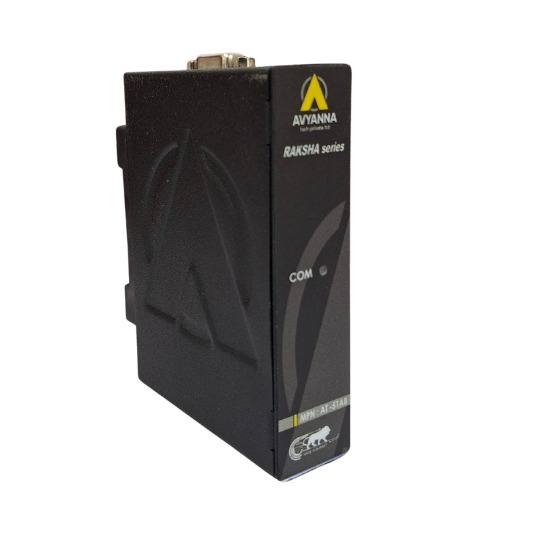
Avyanna Tech Raksha Series RS232 to RS485 Converter
The Raksha Series from Avyanna Tech is designed for smooth and reliable communication between industrial interfaces and protocols.
Available Models
AT-51ABG: RS232 to RS485/422 Converter with Galvanic Isolation
AT-51ABO: RS232 to RS485/422 Converter with Optical Isolation
Important Technical Features
Based on the provided datasheet, the Raksha Series offers:
- RS232 to RS485/422 conversion
- Full duplex communication
- Isolation protection
- DIN-rail mounting
- Built-in surge protection
- Wide baud rate support
- Industrial-grade reliability
Communication Support
- RS232: DB9 connector
- RS485: 2-wire or 4-wire
- RS422 compatibility
Power Input
- 24V recommended operating supply
- Reverse polarity protection available
Operating Temperature
- 0°C to 60°C
These features make the converter suitable for industrial automation and control systems.
Applications of RS232 to RS485 Converters
- PLC Communication: Many PLCs still use serial communication ports. A converter enables smooth communication between PLCs and RS485-based industrial networks.
- SCADA Systems: SCADA systems require reliable long-distance communication across industrial plants. RS485 networks help improve communication stability.
- CNC Machines: Legacy CNC machines often use RS232 communication. A converter helps integrate them into modern automation systems.
- Building Automation: Converters are widely used in: HVAC systems, Energy monitoring, Building management systems, Access control systems
- Data Acquisition Systems: Industrial monitoring systems use converters for stable communication between sensors, controllers, and monitoring software.
How to Choose the Best RS232 to RS485 Converter
Before purchasing, consider these factors.
- Check Communication Type: Ensure the converter supports: RS485, RS422, Full duplex or half duplex
- Consider Isolation Requirements: For industrial environments, isolated converters are strongly recommended. Isolation improves: Equipment protection, Signal stability, Noise immunity
- Verify Baud Rate Compatibility: Always match converter baud rate support with your devices.
- Evaluate Mounting Options: DIN-rail mounting is preferred in industrial control panels.
- Choose Industrial-Grade Devices: Industrial environments require rugged and reliable hardware.
Avoid low-quality converters that may fail under continuous operation.
Common RS232 to RS485 Communication Problems
1. Signal Noise: Electrical interference can affect communication quality.
Solution: Use isolated converters with surge protection.
2. Communication Failure Over Long Distance: Improper wiring or weak converters may cause signal loss.
Solution: Use industrial-grade RS485 converters designed for long-range communication.
3. Baud Rate Mismatch: Different baud rates between devices can stop communication.
Solution: Verify baud rate settings before installation.
Benefits of Choosing Avyanna Tech
Avyanna Tech focuses on industrial communication and automation solutions designed for reliable field performance.
Advantages of the Raksha Series
- Industrial-grade design
- Isolation protection
- Surge protection
- Wide baud rate compatibility
- Reliable communication performance
- DIN-rail mounting support
These features make the Raksha Series suitable for industrial automation projects across India.
FAQs
1. What does an RS232 to RS485 converter do?
An RS232 to RS485 converter converts RS232 serial communication into RS485 communication, allowing long-distance and multi-device industrial networking.
2. Why is RS485 preferred in industrial automation?
RS485 offers:
- Better noise immunity
- Longer communication distance
- Multi-device connectivity
- More reliable industrial communication
3. What is the difference between isolated and non-isolated converters?
Isolated converters provide protection against electrical surges and noise, improving communication reliability in industrial environments.
4. Can RS232 to RS485 converters be used with PLCs?
Yes. These converters are commonly used for PLC communication in industrial automation systems.
5. Which industries use RS232 to RS485 converters?
Industries including:
- Manufacturing
- Automation
- Energy
- Building management
- CNC machining
- Process control
commonly use these converters.
Conclusion
Choosing the right RS232 to RS485 converter is critical for reliable industrial communication. From PLC systems to SCADA networks and CNC machines, a high-quality converter helps improve stability, communication range, and equipment protection.
The Raksha Series from Avyanna Tech is built for industrial environments where reliability and communication performance matter most.
If you are looking for a dependable industrial communication solution in India, explore the Raksha Series converters today.
[email protected]