I/O Module Manufacturer vs Distributor: Which Is Better for Industrial Automation?
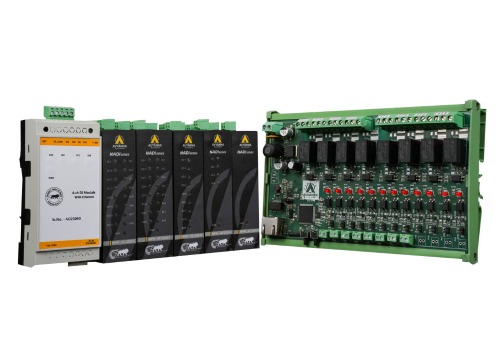
IO Module Manufacturer vs Distributor: Which Wins?
When sourcing remote I/O modules for an automation project, one of the first decisions isn’t about which specific product to buy – it’s about who to buy it from. Working directly with an IO Module Manufacturer and going through a third-party distributor both get equipment onto your loading dock, but the two paths differ significantly in technical support, customization ability, pricing, and lead times. For a one-off purchase of a standard input output module, the difference may not matter much. For a facility-wide automation rollout or an ongoing relationship involving custom configurations, it can matter a great deal.
This comparison breaks down the practical differences between buying directly from an IO module manufacturer versus through a distributor, so you can determine which sourcing path fits your project’s scale, technical requirements, and timeline.
What’s the Difference Between an IO Module Manufacturer and a Distributor?
An IO module manufacturer designs and produces remote I/O modules and input output modules directly, controlling everything from component sourcing to quality control to firmware development. A distributor, by contrast, purchases inventory from one or more manufacturers and resells it, typically without involvement in product design, engineering, or manufacturing decisions.
Both play legitimate roles in the industrial automation supply chain – the right choice depends on what your project actually needs beyond just the physical hardware.
Comparing IO Module Manufacturers and Distributors Across Key Factors
1. Technical Support and Engineering Access
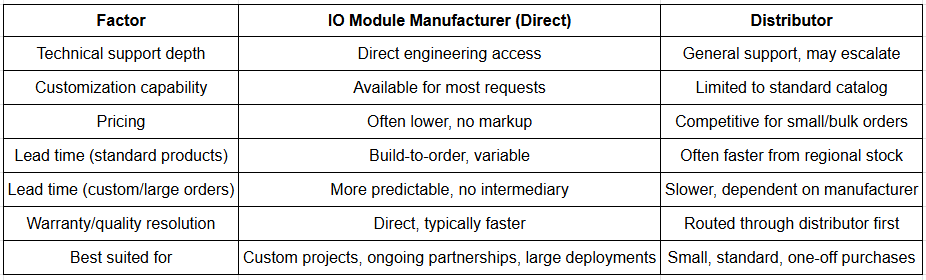
An IO module manufacturer typically has direct access to the engineers who designed the product, meaning technical questions about firmware, protocol compatibility, or custom configuration options can be answered with first-hand product knowledge. Distributors generally provide general customer service and may need to escalate technical questions back to the manufacturer, adding a step (and potential delay) to the support process.
2. Customization Capability
For projects requiring non-standard I/O point configurations, custom firmware, or specific protocol adaptations, working directly with a manufacturer is usually necessary – distributors typically sell only from existing standard catalog inventory and rarely have the ability to accommodate custom requests.
3. Pricing and Margin Structure
Buying directly from a manufacturer often eliminates the distributor markup, though the actual price difference varies by order volume, region, and specific manufacturer pricing policies. For very small, one-off orders, some distributors may offer competitive pricing due to bulk purchasing arrangements with manufacturers, so this comparison is worth verifying case by case rather than assuming direct is always cheaper.
4. Lead Times and Inventory Availability
Distributors often maintain regional inventory of common, standard products, which can mean faster delivery for off-the-shelf items compared to ordering directly from a manufacturer that may build to order. However, for larger orders or custom configurations, going directly to the manufacturer often results in more predictable lead times, since there’s no intermediary inventory or reseller process involved.
5. Long-Term Relationship and Account Management
For facilities planning ongoing or repeat purchases – such as scaling a remote I/O module deployment across multiple production lines – a direct relationship with an IO module manufacturer can lead to more consistent account management, prioritized support, and better visibility into future product roadmaps or firmware updates.
6. Warranty and Quality Issue Resolution
Warranty claims and quality issues are typically resolved faster when working directly with the manufacturer, since there’s no need to route the issue through a distributor first. This can meaningfully reduce downtime when a defective input output module needs replacement or repair.
IO Module Manufacturer vs. Distributor: Comparison Table
When Buying from a Distributor Makes Sense
A distributor is often the more practical choice when:
- You need a small quantity of standard, off-the-shelf input output modules quickly
- The project doesn’t require any customization or non-standard configuration
- You already have an established purchasing relationship or account with a specific distributor
- Regional stock availability means faster delivery than ordering direct
When Buying Directly from an IO Module Manufacturer Makes Sense
Going direct to the manufacturer is generally the better path when:
- The project requires custom I/O configurations, firmware modifications, or non-standard protocol support
- You’re planning a large-scale or ongoing deployment across multiple facilities or production lines
- Technical support with deep product knowledge is a priority, particularly for complex integration projects
- You want direct visibility into product roadmaps, firmware updates, and long-term availability commitments
- Pricing at volume favors eliminating the distributor markup
Evaluating Remote I/O Manufacturers in India: What to Look For
For facilities sourcing locally, working with remote i/o manufacturers in India offers practical advantages beyond just avoiding import lead times and customs complexity. When evaluating local manufacturers, consider:
- Build quality suited to Indian industrial conditions, including tolerance for heat, dust, and voltage fluctuations common across the region’s electrical infrastructure
- Local technical support and service response times, which are typically faster than working with an overseas-only supplier
- Product range breadth, covering different I/O point counts, protocols, and form factors without requiring multiple vendor relationships
- Documentation and integration support for common PLC and SCADA platforms used across Indian manufacturing sectors
- Long-term availability commitments, ensuring replacement remote I/O modules remain sourceable for years after initial deployment
A well-established local IO module manufacturer often combines the customization and support advantages of buying direct with the faster logistics of working with a regional supplier – a combination that’s difficult to replicate when importing from overseas manufacturers or working through multiple layers of distribution.
How to Decide: A Quick Framework
- Small, standard order, tight timeline → Distributor is often the faster, simpler choice
- Custom configuration or non-standard I/O requirements → Go directly to the IO module manufacturer
- Large-scale or multi-site deployment → Direct manufacturer relationship typically offers better pricing and support consistency
- Ongoing or repeat purchasing relationship → Direct sourcing builds better long-term account management and product roadmap visibility
- Need for fast local support and service → Prioritize an established remote I/O manufacturer with regional presence
Frequently Asked Questions
What is the difference between an IO module manufacturer and a distributor?
An IO module manufacturer designs and produces remote I/O modules and input output modules directly, with full control over engineering and quality. A distributor purchases finished inventory from manufacturers and resells it, typically without involvement in product design or customization.
Is it cheaper to buy directly from an IO module manufacturer?
Often, yes, since buying direct eliminates distributor markup. However, for very small orders, some distributors offer competitive pricing due to their own bulk purchasing arrangements, so it’s worth comparing pricing case by case rather than assuming direct sourcing is always less expensive.
When should I buy remote I/O modules from a distributor instead of a manufacturer?
A distributor is often the better choice for small, standard orders where fast delivery from regional stock matters more than customization, and when the project doesn’t require any non-standard I/O configuration or firmware modification.
Why work with remote I/O manufacturers in India instead of overseas suppliers?
Local remote I/O manufacturers in India typically offer faster technical support, shorter lead times without import complexity, and equipment better suited to regional industrial conditions like heat, dust, and voltage fluctuations, compared to sourcing exclusively from overseas manufacturers.
Can a distributor provide the same technical support as an IO module manufacturer?
Distributors generally provide general customer service and product information, but complex technical questions often need to be escalated back to the manufacturer, whereas buying direct typically provides access to engineers with first-hand product knowledge.
Choose the Sourcing Path That Matches Your Project
Deciding between an IO Module Manufacturer and a distributor isn’t about which option is universally better – it’s about matching the sourcing path to your project’s scale, customization needs, and timeline. Small, standard orders often move faster through a distributor, while custom configurations, large deployments, and ongoing partnerships typically benefit from a direct manufacturer relationship.
At Avyanna Tech, we work as a direct IO module manufacturer, offering remote I/O modules and input output modules with the technical support, customization capability, and local service that distributors often can’t match. Contact us to explore our full range of remote I/O modules and source directly from a manufacturer built for Indian industrial automation.

[email protected]