
When Do You Need an RS485 Isolator in an Industrial Automation System?
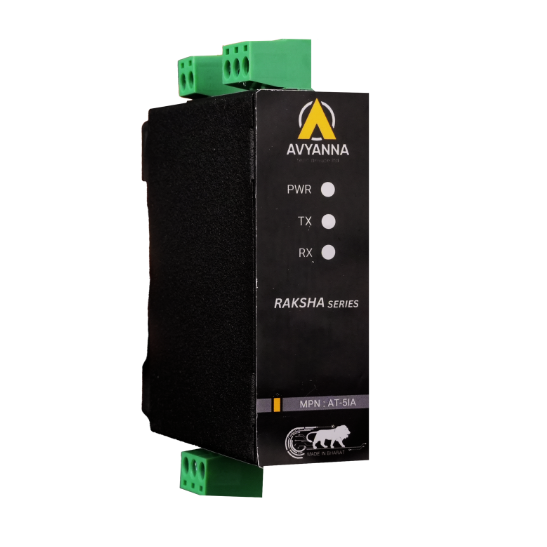
RS485 Isolator: When Your System Actually Needs One
An RS485 isolator breaks the electrical connection between segments of an RS485 network, protecting connected devices from ground loops, voltage differentials, and electrical transients that would otherwise travel freely across the bus. Not every RS485 installation needs one – a short, single-source-powered network in a clean electrical environment may run fine without isolation. But in many industrial automation systems, skipping isolation is exactly what leads to unexplained communication errors, damaged equipment, or a device on the bus that mysteriously stops responding.
Knowing when an isolator RS485 device is genuinely necessary – rather than adding one reflexively to every installation – comes down to understanding a handful of specific risk factors: multiple power sources, long cable runs, electrically noisy environments, and equipment separated across different grounding points.
This article walks through exactly when an RS485 isolator becomes necessary in an industrial automation system, and how a related device – the rs485 isolator repeater – extends both protection and distance on the same network.
What Does an RS485 Isolator Actually Do?
An RS485 isolator sits inline on an RS485 bus and electrically separates one segment of the network from another, typically using optical or transformer-based isolation. Data continues to pass through the isolator, but the electrical reference points (grounds) on either side remain independent. This means:
- Voltage differences between separated ground points no longer inject noise into the data signal
- Electrical transients or surges on one side of the isolator don’t pass through to damage equipment on the other side
- Devices powered from different sources, or located in different buildings or electrical zones, can communicate without a shared ground reference
Without isolation, an RS485 network is only as electrically “clean” as its least reliable ground connection – a single problematic ground point anywhere on the bus can introduce noise that affects every device on the network.
Signs Your RS485 Network Needs an Isolator
1. Devices Are Powered from Separate Power Supplies
When RS485 devices on the same bus draw power from different sources – especially sources in different parts of a facility – small voltage differences between their ground references are common. An RS485 isolator prevents these differences from coupling into the data line as noise.
2. Devices Are Located in Different Buildings or Electrical Zones
Any time an RS485 cable run crosses between buildings, floors served by different electrical panels, or areas with independent grounding systems, isolation becomes important. Ground potential can vary significantly between these zones, and without isolation, that variance becomes electrical noise on the bus.
3. The Facility Has Heavy Electrical Equipment Nearby
Motors, variable frequency drives (VFDs), welding equipment, and large switching loads generate electromagnetic interference (EMI) and can induce voltage transients onto nearby cabling. An isolator RS485 device helps contain and absorb these transients before they reach sensitive equipment on the other side of the network.
4. You’ve Experienced Intermittent, Hard-to-Diagnose Communication Errors
Garbled data, random timeouts, or devices that occasionally drop off the network – without any clear pattern – are classic symptoms of ground loop interference. If cabling and termination have already been checked and errors persist, isolation is often the missing piece.
5. Lightning or Surge Exposure Is a Concern
Outdoor RS485 runs, or those connecting to equipment in separate structures, are more exposed to lightning-induced surges. An isolator contains surge damage to one segment of the network, protecting the more critical or expensive equipment on the other side.
6. Regulatory or Safety Requirements Call for Galvanic Isolation
Certain industries – pharmaceutical, medical device manufacturing, hazardous area classifications – may have specific requirements for galvanic isolation between control systems and connected equipment, making an RS485 isolator a compliance necessity rather than an optional upgrade.
When You Likely Don’t Need an RS485 Isolator
Isolation isn’t universally necessary. A network is less likely to need an isolator when:
- All devices share a single, well-designed power supply and common grounding scheme
- The entire RS485 network is contained within a single control cabinet or short cable run
- The facility has minimal nearby EMI sources (no large motors, VFDs, or welding equipment)
- The installation has a stable electrical history with no recurring communication issues
In these lower-risk scenarios, adding isolation still provides a safety margin, but it may be a lower priority compared to facilities with the risk factors above.
RS485 Isolator vs. RS485 Isolator Repeater
An RS485 isolator repeater combines two functions in a single device: electrical isolation (as described above) and signal repeating, which regenerates the RS485 signal to extend the maximum usable cable distance and/or increase the number of devices the network can support beyond standard RS485 limits.
| Factor | RS485 Isolator | RS485 Isolator Repeater |
| Primary function | Electrical isolation between segments | Isolation plus signal regeneration |
| Extends cable distance | No | Yes, extends beyond standard RS485 limits |
| Increases device count on bus | No | Yes, allows more devices beyond standard 32-device limit |
| Best suited for | Networks needing isolation only | Long-distance networks needing isolation and extended range |
| Typical use case | Bridging isolated equipment zones | Large facility-wide RS485 networks spanning long distances |
If your network needs isolation but is already within standard RS485 distance and device limits, a standard isolator is sufficient. If you also need to extend cable distance or add more devices than a standard RS485 segment supports, an rs485 isolator repeater addresses both needs in one unit.
How to Choose the Right RS485 Isolator for Your System
- Isolation voltage rating: Look for 1,500V to 3,000V isolation ratings; higher ratings offer more protection in electrically severe environments.
- Data rate compatibility: Confirm the isolator supports the baud rates used by your connected devices without introducing latency issues.
- Repeater functionality: If your network needs extended distance or additional device capacity, choose an RS485 isolator repeater rather than a standard isolator.
- Built-in termination and biasing: Reduces signal reflection and keeps idle bus states stable, preventing false data errors.
- Mounting and durability: DIN-rail mounting and a wide operating temperature range are important for control cabinet or factory floor installation.
- Surge protection rating: Additional transient voltage suppression adds a layer of protection beyond basic isolation in facilities prone to electrical surges.
Frequently Asked Questions
What does an RS485 isolator do?
An RS485 isolator electrically separates segments of an RS485 network using optical or transformer-based isolation, preventing ground loops, voltage differentials, and electrical transients from one segment from affecting devices on another segment.
When do I need an RS485 isolator?
An RS485 isolator is typically needed when devices on the network are powered from separate power supplies, located in different buildings or electrical zones, situated near heavy electrical equipment like motors or VFDs, or when the network has experienced intermittent, hard-to-diagnose communication errors consistent with ground loop interference.
What is the difference between an RS485 isolator and an RS485 isolator repeater?
An RS485 isolator provides electrical isolation only, while an RS485 isolator repeater combines isolation with signal regeneration, extending the maximum cable distance and allowing more devices on the network than a standard RS485 segment supports.
Can an RS485 network work without an isolator?
Yes, in low-risk conditions – such as a single control cabinet with one shared power supply and minimal nearby electrical interference – an RS485 network can function reliably without isolation. However, isolation still provides added protection and is recommended for facilities with any of the common risk factors.
Does an RS485 isolator reduce data speed?
Quality RS485 isolators are designed to support standard RS485 baud rates without significant data rate reduction, though very high-speed applications should confirm the specific isolator’s supported baud rate range before installation.
Protect Your Network Before Errors Start
Not every RS485 network needs isolation, but the ones that do rarely announce it clearly – instead, the symptoms show up as intermittent errors, mysterious dropouts, or damaged equipment that’s hard to trace back to its root cause. An RS485 isolator addresses these risks directly, and where extended distance or device count is also needed, an rs485 isolator repeater solves both problems in a single device.
At Avyanna Tech, we help engineers and system integrators determine when isolation is necessary and select the right RS485 isolator or isolator repeater for their specific network. Contact us to explore our full range of isolation solutions and keep your RS485 network protected from the errors isolation is designed to prevent.


[email protected]